
PHR Mailbag: Blackhawks, Bedard, Hofer, Brunette, Breakout Players, Laviolette
Topics in this edition of the PHR Mailbag include an assessment of Kyle Davidson as GM of the Blackhawks, the backup goalie situation in St. Louis, and more. If your question doesn’t appear here, check back in our last mailbag while we have one more coming from our most recent call for questions as well.
Unclemike1526: What is your evaluation of Kyle Davidson? I think he’s done a fine job of acquiring talent while taking some shots at veterans to try and catch lightning in a bottle to maybe make the playoffs. None of those contracts are bad enough to block anybody important. Moving off Jones and Mrazek was a stroke of genius IMO. This seems to be the year where some serious talent arrives at the end and they move up. Moore, Rinzel, Thompson should be here soon. However, where he has been lacking is picking the right coach to blend the young and the old. If his next coach pick fails, is he in trouble? I feel this is a crucial decision for him AND the team. Your thoughts? Thanks as always.
I’m not sure about their veteran additions being geared toward trying to catch lightning in a bottle for a playoff push. I think it was more culture additions – especially in the 2023 summer – and then last summer, trying to add pieces to raise the floor of their forward group and push some younger players into bigger roles in Rockford. I don’t have a problem with that strategy either, although some of the short-term contracts are pretty steep overpays. Granted, with their cap space, they can easily afford it.
Circling back to the first part of the question, I think the macro-level view is positive. Davidson has brought in several quality prospects and landed what they hope is a franchise player in Connor Bedard. Their cap situation is about as clean as anyone’s and they have plenty of draft picks to fill the cupboards moving forward. That’s all great.
Looking at the micro-level view, it’s not as great. Some good deadline dealing aside, some of the veterans brought in haven’t had the desired impact in terms of raising the floor and insulating the young talent. This year has been ugly from a win-loss perspective and in some cases, a development perspective which is the last thing you want in a rebuilding year. It hasn’t mattered who’s coaching this group, neither Luke Richardson nor Anders Sorensen could get enough out of them. While the longer-term objectives are getting hit (a high draft pick this June, development at lower levels for the younger prospects), how this season has gone takes a bit of the shine off the longer-term positives.
The general belief is that GMs get three coaches and then things start to get shaky. And in this case, whoever is hired to coach next season would be number three. But with Sorensen being an interim in-season promotion, I don’t think that will count against Davidson. Most coaching targets aren’t available midseason so you do what you can with who you have and go from there. So, in my mind, whoever is coaching next season will be the second hire. As long as Chicago starts to show some more progress under that bench boss next season, I think Davidson will be fine for a little while yet.
Zakis: Read that some Hawks fans want Bedard run out of town due to regression and some silly penalties recently. First, what are they thinking? And two, in the nonzero chance they think about moving him (0%), what would the return look like?
I was baffled seeing some trying to correlate a couple of misconduct penalties to a desire to leave when it comes to Connor Bedard. And it’s more baffling to think some would want him run out of town already; I can’t come up with a logical reason for someone to have that mindset. He’s still a junior-aged player, anchoring a team that frankly isn’t very good. If you look back at some of the teenagers who had strong second seasons, their supporting cast was a lot better than Bedard has had.
Saying that doesn’t absolve him from any blame by any stretch either. I expected he’d take a step forward development-wise this season and he hasn’t. But I still think he’s going to be a legitimate star center in this league and those are players you don’t give up on early when things aren’t going well. And that’s why he’s obviously not getting dealt.
But since you’re asking about the hypothetical scenario that he is, a lot would depend on if the reset button is being pushed. If so, then the return is more futures or prospect-based. (Think a recent top-five center, one or two other first-rounders, and a quality prospect or two for good measure.) But if the intention is to accelerate things, then you’re looking at maybe an established top-line center with plenty of team control remaining, plus some other younger NHL-level upgrades. I’m being purposefully vague here as I can’t think of a single established young center who would fit that part of the return that another team would want to move so it doesn’t really matter what the other pieces would be if the core one isn’t there. Either way, it’s clearly not happening.
Gmm8811: In your mind, has Joel Hofer done enough to warrant a two-year extension or has Colten Ellis overtaken him? If Hofer gets offer sheeted, does Armstrong take the draft pick?
Hofer has absolutely done enough to warrant another contract. He has certainly established himself as a legitimate second-string option and there’s a case to be made he should be playing more than he has. It’s worth noting that he’s three years away from unrestricted free agency so a two-year deal would still make him a restricted free agent at the end, albeit one that puts him a year away from hitting the open market. If they’re not ready to commit a long-term deal to him, that term makes sense with an AAV approaching the $3MM range.
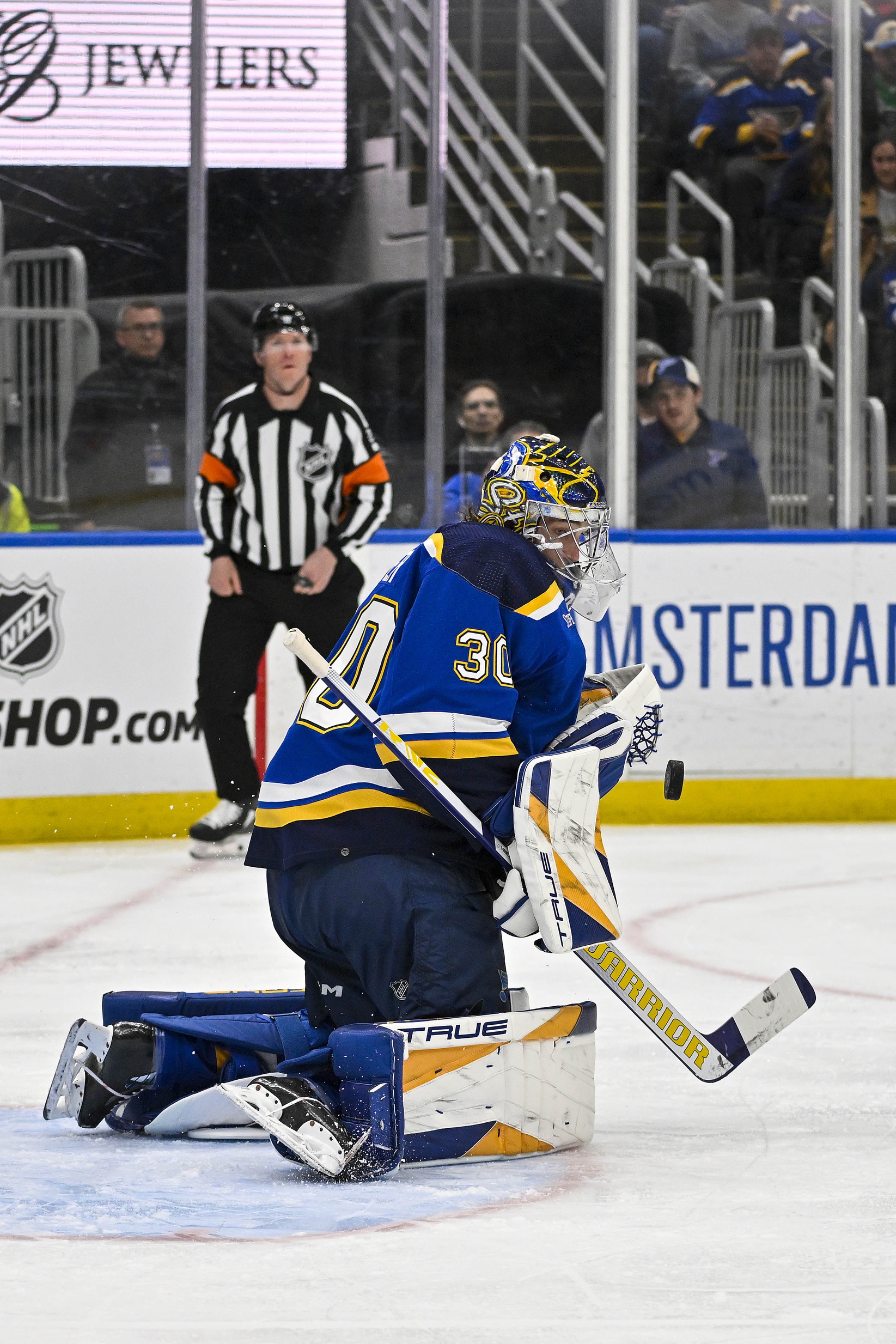 The offer sheet is interesting in theory. It’s not a great UFA market for goaltenders so if there’s a team that thinks Husso could be a better long-term option, then an offer sheet would make sense. Again, that’s really only in theory. Let’s look at last year’s offer sheet thresholds, numbers that will only be higher this summer. I can’t see the Blues letting him walk for a second-round pick so that means the offer would need to be higher than at least $4.58MM (which is probably closer to $4.8MM or so this summer) to get them to balk. Is there a team that would him that much on a five-year deal or less? (Anything more than that and the compensation cranks up further with the maximum divisor being five.) I like Hofer but I don’t think there’s a team willing to pay that much money plus a first-round pick and a third-rounder to get his services.
As for Ellis, this is his fourth professional season and the only one in which he hasn’t spent extended time in the ECHL. He’s having a nice year with AHL Springfield for sure but I doubt he’s done enough to make St. Louis management think he’s ready for full-time second-string duty with them. I suspect their plan is to have him as the starter for the Thunderbirds next season pending waivers.
Jakeattack: In your opinion, how much job security does Brunette have with Nashville? Last season, multiple players hit new career highs. This season? Well, everyone knows how this season has gone for multiple reasons.
GBear: Apart from GM Trotz being buddies with Andrew Brunette, can you see any way that Bruno doesn’t get fired at the end of this season?
It certainly has been an ugly year in Nashville, hasn’t it? Even if you expected that the team wouldn’t be as good as the group that went on a massive point streak to go from dead in the water to playoff spot, the thought was that some of their key additions over the summer – Steven Stamkos, Jonathan Marchessault, and Brady Skjei – would at least be enough to offset that, keeping them squarely in the playoff mix. Instead, they’ve already been mathematically eliminated (only one of three teams with that fate) and finishing 30th overall is the probable outcome at this point.
Here’s the question that I’m pondering. Last year was a year where everything went right in the second half and this season has been one where pretty much nothing has gone right. Can that happen two years in a row or are we likely to see a bounce-back from several players? I’m inclined to think it’s the latter which could work in Brunette’s favor.
Brunette is only in his third season as an NHL head coach but even with how things have gone this season, his teams have played to a .587 points percentage which is among the higher numbers among NHL coaches. Looking at it from afar, if Trotz believes in Brunette’s limited track record and thinks that things can’t go so poorly again next year, I could see a scenario where he stays.
There’s also the matter of his contract, which has two years plus an option remaining on it. If Trotz thinks that next season could be another transition type of year where they might not be a playoff contender, the inclination may be to give him another year to see how things go and avoid having two pay two head coaches for two years. And if things don’t go well early next season, they could easily pivot and make the move at that time.
Do I think that Brunette should feel quite secure in his job for next season? No; any time that things go that badly, a coach can’t feel too secure in his future. But honestly, I wouldn’t be shocked if he is back behind the bench next season.
PyramidHeadcrab: What are some notable examples of players that have gone from so-so to nearly elite after being traded to the right team?
I feel like we’ve seen a few examples in recent years, but it’s always fun to think a 3rd liner from Pittsburgh could become a playoff-defining top-liner on, say, Calgary.
I can think of a couple via the trade route but more from other routes. On the trade side, Chandler Stephenson went from a fourth-line depth piece in Washington to a two-time 60-plus-point player in Vegas and while he probably won’t get there this season with Seattle, he’s on pace to surpass 50 at least. The other is Sam Bennett. With Calgary, he showed some flashes of being an impactful power forward but by the end of his time there, he was a third-line winger with a point total in the 20s. Meanwhile, in Florida, Bennett is now a full-time top-six center, notching at least 40 points a season, and is about to become one of the most sought-after players on the open market in July should a pricey extension not be reached by then.
Florida also comes to mind about some of the other routes as well. Carter Verhaeghe was a fourth liner in Tampa Bay, went to the Panthers in free agency, and has a pair of 70-point seasons under his belt since then while becoming a top-six fixture as well. Going back a few years, Marchessault followed a similar path, going from a fourth liner with the Lightning to a 30-goal guy in Florida before being moved to Vegas where he produced even more. If we look at waivers, Gustav Forsling couldn’t crack Carolina’s roster, was claimed off waivers (by Florida, yet again), and has become an all-situations top-pairing player. (If you’re looking for a reason why the Panthers are a consistent contender, finding these under-the-radar gems is a huge part of that.) It looks like Dylan Holloway (offer sheet) should be part of this category as well after going from being a depth piece with Edmonton to a top-50 scorer in St. Louis.
frozenaquatic: Can a coach be fired in the middle of a game? Asking for Laviolette.
I don’t think there’s anything in the rules that says it can’t happen. If a player can be traded mid-game (as Jakob Pelletier was not long ago, for example), a team could make an in-game coaching change. But I wouldn’t expect to see that happen. As for Peter Laviolette’s future with the Rangers, that’ll probably be decided on at the end of the season; it’d be surprising (though not unprecedented) for a team still in the playoff mix to make a coaching change this late in the year.
Photo courtesy of Jeff Curry-Imagn Images.
PHR Mailbag: Playoffs, Levi, Rangers, Flames, Kantserov
Topics in this edition of the PHR Mailbag include a look at what has been a busy season for the Rangers on the trade front and what’s potentially to come, assessing Calgary’s notable trade from earlier in the year, and more. If your question doesn’t appear here, check back in one of our next two columns.
Cla23: If the playoffs started today which teams are Paper Tigers?
Assuming we’re not talking about the Wild Card teams, let’s look at the ones whose spots are more secure. In the East, I don’t trust the Metropolitan Division outside of Washington (and even then, with it being their first real playoff run in a while, an upset wouldn’t shock me). Carolina’s underlying numbers are always strong but they typically struggle to score in the postseason and are a weaker team on that front compared to the past. I think they’ll get by New Jersey whose injuries are probably going to be too much to overcome but as a perceived contender in past years, the Hurricanes won’t get over the hump. I could see any of the top three teams in the Atlantic coming out of that division so I can’t nitpick on them too much.
Out West, I still have some doubts about Winnipeg. Connor Hellebuyck is a great goalie but teams have figured him out in the playoffs the last couple of times. They still don’t have a true second center which is probably going to hurt as well. On paper, I think they’re a weaker team than Dallas and Colorado and the Jets will have to go through one of them. A long run for Winnipeg would be great for that market and core group but I’d be surprised if it happened. In the Pacific, I’m leery about Edmonton’s chances of making it out of the division let alone the conference again. I think they’ll get past Los Angeles assuming that matchup holds but their goaltending remains a big question mark, as does the secondary scoring. Can their top group carry them again? Sure. Will they? I’m not so sure about that.
The Duke: Is Devon Levi an AHL lifer?
Things certainly haven’t gone great for Levi this season. Originally expected to see a lot of time with Buffalo and maybe a bit of time with AHL Rochester to get a few more games in, it instead has been the exact opposite. Levi has a 4.12 GAA with a .872 SV% in nine appearances with the Sabres this season which played a big role in them going and reclaiming James Reimer from Anaheim early in the year. That brings his overall NHL numbers to a 3.29 GAA and a .894 SV% in 39 games. It’s certainly fair to say that things haven’t gone as planned for him so far.
But there is some reason for optimism with Levi still. His numbers with AHL Rochester last year were stellar. His numbers this season are reasonably close (a little lower of a GAA and SV%) and are still well above league average. Yes, he’s playing behind a more veteran-laden team down there that’s good defensively but that tells me he can still bring something to the table. People have been saying this for year but one day, Buffalo is going to be good again. A lot will come from their core young blueliners getting better which just takes time and reps. In a year or two when they’re better, it wouldn’t shock me if Levi performs a lot better for the Sabres.
Levi is still 23 and when you consider his first pro season was only a handful of games, it’s really only his second full professional campaign. Goalies generally have a longer and more gradual development curve; Levi only has 59 AHL games under his belt so far when lots of good prospects get double that. There’s still up to two years of waiver exemption left (though that will end once he gets into 21 more NHL games) so there’s still a fair bit of time for him to improve.
If it was me in charge, I’d be looking for another one-year stopgap option between the pipes to back up Ukko-Pekka Luukkonen. Levi needs plenty of playing time and giving him that behind a defense that’s still going through some growing pains might do more damage development-wise. A year or two from now, both he and Buffalo’s back end will be more ready and I expect he’ll fare better at that time. Levi might not be their long-term starter of the future but I still think he’s going to be at least a capable NHL netminder down the road.
Schwa: Curious to hear your thoughts on Chris Drury’s attempts to ‘retool’ the NYR roster. I think he certainly blew up the locker room chemistry, but obviously cleared some bad contracts that he inherited.
– Do you see Kreider and maybe Mika (if he waives trade protection) moving out this summer? Seems to further prioritize cap at risk of further damage to the room? What kind of trade value do you see here – or is this an attach an asset to rid the contract?
– Also, thoughts on the D extensions, I feel Borgen has been better than expected, while Urho and Soucy seem to maybe block some AHL prospects/Zac Jones. Is K’Andre going to see an extension as well? Perhaps price dependent?
The ruthlessness that Drury showed unloading those bad contracts (Barclay Goodrow and Jacob Trouba) was something we rarely see. It accomplished the objective of getting them off the books without any lingering effects which was good but it’s also ruffled some feathers, so to speak. It wouldn’t shock me if that has played a role in some of their struggles, especially in the first half of the season but that’s obviously impossible to quantify.
The return for Trouba was pretty light but with freeing up the cap space being the key objective, it looks better in that lens. The Kaapo Kakko trade was pretty underwhelming but getting someone that’s going to turn into a long-term piece makes that look a little better. I didn’t mind the J.T. Miller trade from a value perspective although being a buyer with where they were in the standings is a bit odd. But when the opportunity presents itself to get an impact player, you can’t turn it down thinking it’s just not the right time. The return for Ryan Lindgren felt a tad light but if Juuso Parssinen turns into a decent piece, that can still be turned around. I liked the Reilly Smith return a lot while the Carson Soucy trade was a bit of a head-scratcher. All in all, it’s kind of a mixed bag. Lots of change, a definite turn in the types of players they added, and in the end, they’re still largely mediocre.
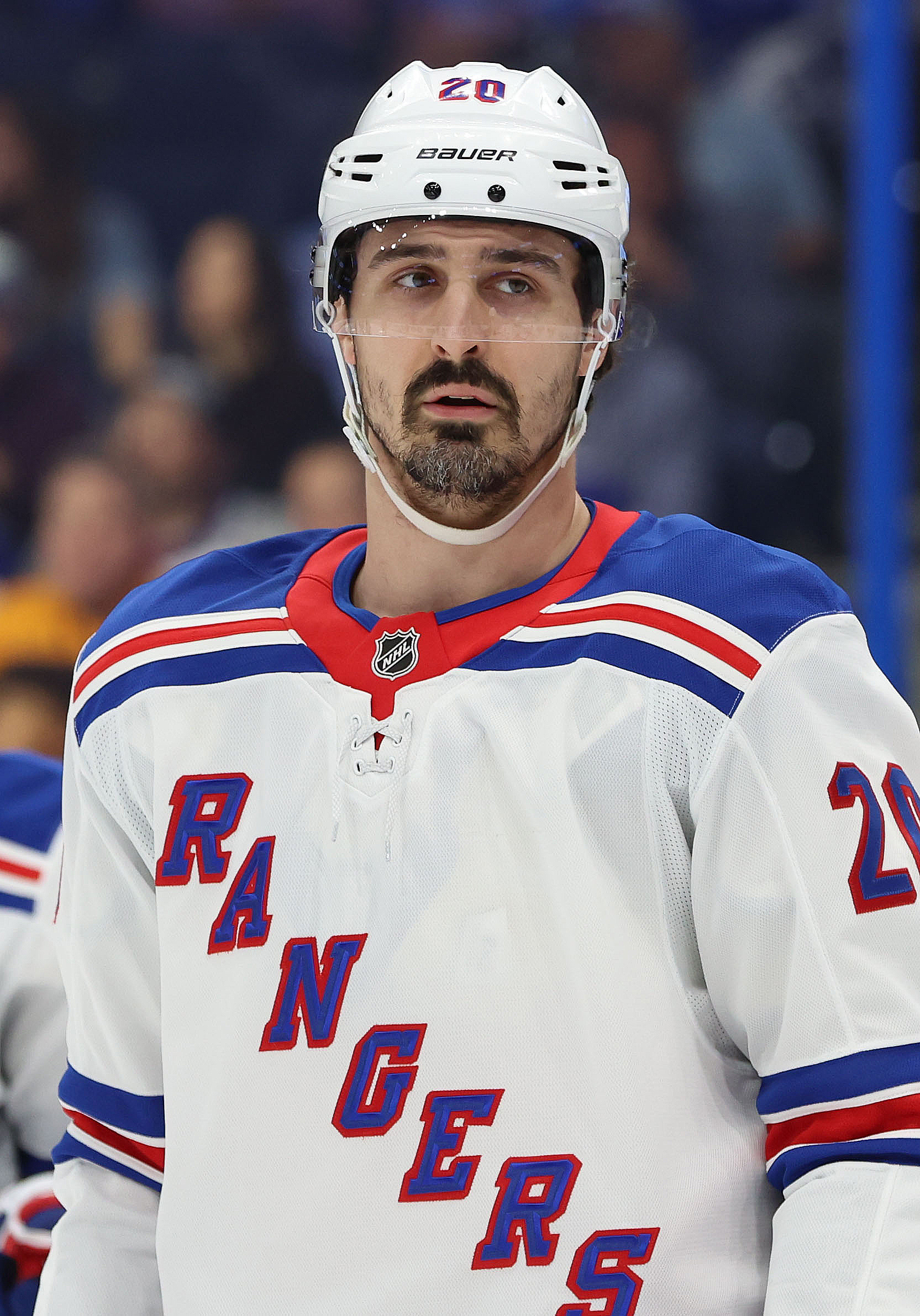 Chris Kreider has two years left on his contract after this one with a $6.5MM AAV. He’s not having a particularly good year but barring injury, he’ll pot 20 goals once again and we all know his scoring prowess from the previous few seasons. Someone’s going to think a change of scenery can spark him. Considering that he can play with a bit of an edge still, I think there’s a Trouba-like market for him. Someone will take the contract on and New York could get a small something in return while getting out of the entirety of the deal. But if they wanted to pay that down for a couple of years, I think they could get a decent prospect for Kreider’s services. They won’t need to attach an asset to move him.
As for Mika Zibanejad, that one’s a tougher call. He has three years at $8.5MM per season left which is a bit of a bigger ticket to take on, especially with his production dipping considerably as well. That third year is the hard part as we saw with Trouba that teams will take on two for cheap. But it’s not a deep center market in free agency and there will be teams who miss out. Would one take themselves out of the mix early to take on Zibanejad for next to nothing? I think a few might. But Zibanejad has the hammer here with a no-move clause that takes doing what they did with Goodrow off the table. If he limits his market to only a handful of teams that aren’t the best of fits, New York might have to retain some money, attach an asset, or take a multi-year deal in return to balance the money. The path to move him will be trickier.
As for the defense extensions and acquisitions, that’s a mixed bag. I like Will Borgen but I don’t like five years at $4.5MM per season for him. With the year he’s having, I can’t see him beating that if he went to free agency. He’s a useful player in the right role and good righties are hard to get but that extension seemed like too much, too soon. Urho Vaakanainen for two years at $1.55MM also feels a little high for someone who is more of a reserve or depth player but it’s not terrible. And adding Soucy gives them a pricey third-pairing option that cuts into money they will need to re-sign K’Andre Miller this summer. I do expect him to get a one-year deal around his $4.646MM qualifying offer as his trade market will be weakened after a rough year. He’s two years away from UFA eligibility so a bounce-back showing in 2025-26 could net him the long-term agreement it looked like he’d be landing not that long ago.
uvmfiji: Frost/Farabee trade. Woof.
So, let’s check in on the two newest Flames, shall we? The results, well, haven’t been pretty. Frost has two goals and four assists in 18 games while Farabee has three goals and two helpers in that same stretch. For players who have shown themselves to have some offensive upside in the past (Farabee is only a year removed from tallying 50 points while Frost had over 40 points the last two years before this), it’s fair to say that Calgary was hoping they’d be able to contribute more than they have so far.
The fit with how Ryan Huska has the Flames playing is a bit of a question mark. Calgary is a team that plays low-event hockey with lots of attention to detail on defense and positioning. With a roster that isn’t the most talented on paper, that makes sense too. But those two players weren’t exactly known for that with the Flyers so now they’re trying to learn a new system and play a little differently than they were before. Accordingly, some early struggles may be disappointing but they’re also understandable.
I’d still do that trade from Calgary’s standpoint without hesitation today. Yes, there’s risk in three more years at $5MM for Farabee but they have plenty of cap space with the Upper Limit rising quickly and if he can get back to his 2023-24 form, they’ll make out quite well. Frost has another RFA year left and probably gets a short-term deal that buys a season or two of eligibility at a price tag that isn’t going to be a drag on anything the Flames want to do in the short term. To get that for a pricey rental whose standalone value was quite limited (Andrei Kuzmenko), a player who cleared waivers at the beginning of the year (Jakob Pelletier), and a second-round pick, that’s still solid work from an asset accumulation perspective. Meanwhile, we’ll see what the Flyers have planned for that extra cap space this summer.
Unclemike1526: What are the realistic odds that the Blackhawks can get Kantserov to come over from Russia next year? Asking for whoever the Hawks hire for a coach next year.
The realistic odds here would be slim to nil. Roman Kantserov is signed through next season with Metallurg Magnitogorsk of the KHL. Unlike most international federations, there isn’t a transfer agreement between the NHL and Russia so it’s not as if Chicago can sign Kantserov to an entry-level deal that supersedes the KHL one and pay a prescribed fee.
Now, if Metallurg was to release Kantserov early, then he could go and sign with the Blackhawks. But he’s their second-leading scorer despite missing 21 games due to injury; he has 13 goals and 25 assists through 47 outings. Knowing that, what would be their motivation to release him early?
Players can buy their way out of a contract but NHL teams aren’t able to contribute to that while Kantserov is obviously capped at what he can earn on an entry-level pact with Chicago so it’s not like the Blackhawks could up his offer high enough to cover the buyout that way. So this doesn’t seem like a viable option either. Maybe they work out something that says if he doesn’t make the NHL roster, he has to go back to the KHL (a European Assignment Clause); that’s about the only semi-realistic option there is. But again, what incentive does Metallurg have to agree to that?
Realistically speaking, the earliest the Blackhawks will probably see Kantserov is the 2026-27 season. KHL contracts now expire at the end of May and with all due respect to Chicago’s fans, I don’t think there’s much of a chance they’ll be playing into June in 2026. More patience will be needed before he can come to North America.
Photo courtesy of Kim Klement Neitzel-Imagn Images.
Submit Your Questions For The #PHRMailbag
It has been a busy last month or so around the hockey world. The 4 Nations Face-Off came and went with plenty of success while the trade deadline featured several swaps of note with some teams willing to significantly shake up their rosters. Now, the stretch run is upon us with several close battles shaping up for a playoff spot.
With all that in mind, it’s a good time to open up the mailbag once again. Our last call for questions yielded enough for three separate columns. The first focused primarily on the 4 Nations tournament as well as Kevyn Adams’ future as the GM in Buffalo. Among the topics in the second were offer sheets and plenty of trade deadline talk. Meanwhile, the third included a discussion on Chicago’s goaltending situation (which has since been simplified a bit), the old Tagging Rule, and more.
You can submit a question by using #PHRMailbag on Twitter/X or by leaving a comment down below. The mailbag will run on the weekend.
PHR Mailbag: AHL Players, Wild, Blackhawks, Ducks, Extensions, CBA
Topics in this edition of the PHR Mailbag include what, if anything, is next for the Wild on the trade front, Chicago’s tough season, and much more. If your question doesn’t appear here, check back in our last two columns.
nolesfan75: Do players like Matthew Phillips and Kailer Yamamoto have any realistic chance of getting another opportunity in the NHL? They both are having strong years at their respective AHL clubs.
It’s unfortunate but it’s hard for smaller offensive players to get any sort of significant opportunity in the NHL once they get labeled as more of a minor leaguer. You’re definitely correct in stating that Phillips and Yamamoto are having strong seasons in the minors but the problem they run into is this. They’re good enough to be impactful players in the AHL but not good enough to be a top-six piece consistently in the NHL. Meanwhile, they’re often viewed as too small to play regular minutes in the bottom six for an NHL team. So, where does that leave them? Basically, they have to hope for a short-term injury to an offensive forward to have an opportunity for a short-term recall and if things go well from there, maybe stick around for a bit.
To make things even harder for them, there might be an NHL team or two who would be willing to give someone like that a chance after the trade deadline to avoid needing to recall someone from their farm team (helping in a playoff push down there). But because Phillips and Yamamoto are big producers in the minors, their respective NHL teams are unlikely to just give them away and weaken their farm team to do right by the player. It’s a tough cycle to get out of which is why these players often move around in free agency each summer, trying to find a new opportunity that gives them a better chance at an NHL look at some point.
letsgonats: Related, do teams target AHL players? Folks like Phillips or Ethan Bear that are all stars at AHL but they are not 21-year-olds but 25–28-year-olds with some NHL experience and can serve as depth. Ethen Frank is “old” at 28 but obviously was buried and stuck in AHL. Do teams try to grab AHL folks and give them the job over existing NHL folks?
There is an annual shuffle of top AHL players that I think at least partially qualifies as a yes to this question. But it’s not necessarily with the idea of having that player displace an NHL regular although they typically promise that the player will get that opportunity at least in training camp. That’s the biggest driver of top AHL players in free agency, just trying to upgrade the AHL teams.
The next level of targets for teams looking at AHL players are young players coming off an AHL contract that a team wants to sign to an NHL deal. Since you’re a Washington fan, I’ll give you a Capitals-specific example, Pierrick Dube. He had a strong first pro year on a minor league deal and that was enough for Washington to have to give him an entry-level contract to secure his NHL rights. There are usually a handful of those moves each summer league-wide.
There aren’t many comparisons to Frank out there. Waivers allow players in his situation to be snapped up if there’s an NHL team that thinks an AHL regular is worthy of a look at the top level and usually, if they’re that confident about that player’s ability to be an NHL regular, they’ll typically try to acquire the player in a small trade beforehand. So while there are some AHL players who are targeted for various reasons, it’s not too often that they’re being looked at as pieces to join an NHL roster full time.
Zakis: What, if anything, will the Wild do? Or be able to do?
I was really hoping that I could get away with pushing this question into this column as I figured that Minnesota would wait until closer to the trade deadline when they might have more clarity on the status of injured forwards Kirill Kaprizov and Joel Eriksson Ek. Oh well.
Realistically, my logic still holds true today though. If one of them can’t return before the end of the regular season, the Wild will have the ability to spend several million to try to add another upgrade or two before Friday’s trade deadline. But if not, they’ll be in a spot where they need to cut down to close to the minimum-size roster to get back to cap compliance. At that point, they’re in a money-in, money-out situation which greatly affects what they’ll be able to do.
I don’t think they’re quite done yet up front beyond the Gustav Nyquist acquisition but that will probably be their biggest move of this stretch. With the struggles of their penalty kill, I suspect they’ll have their eye out for a fourth liner who can kill penalties. In a perfect world, that player would be a center but any shorthanded upgrade would be a welcome one.
It’s worth noting that Minnesota doesn’t have a first-round pick or a third-round selection this year, nor do they have second-rounders in 2026 and 2027 so their trade chips are somewhat limited here, assuming their top youngsters are off the table. But a mid-round pick for a checker making $1MM or less is something I still expect them to do regardless of what happens with Kaprizov and Eriksson Ek. Anything else will be dependent on one of them being out for the rest of the regular season.
Unclemike1526: When Brossoit makes it back to the Hawks, Soderblom will have played too many games to be sent down without passing through waivers. IMO, no player is more improved in the NHL this year than Soderblom. Last year whenever the other team crossed the red line, Soderblom would drop on his knees and wait for the other team to just shoot it over his shoulders. Now that he actually stays on his feet the change has been remarkable.
So, faced with having to keep three Goalies, is there any chance they can move Mrazek when he has next year remaining at $4 million bucks? Would a team need a G bad enough to take that on? Brossoit has no value having been hurt all year and Soderblom might be a keeper. One has to go IMO or we’ll have the same problem again next year as they’ll all have contracts. Thanks again.
I’m glad I got the Seth Jones question out of the way last week and as it turns out, that trade makes this question that much more important. With Spencer Knight now in the fold, Chicago has four netminders under contract for this season. Three are signed already for next year and Arvid Soderblom has done more than well enough to earn a contract for 2025-26 as well. For this year, I’m skeptical that Laurent Brossoit is going to return and they can just run with three goalies for the final seven weeks of this season so it’s not necessarily a problem just yet.
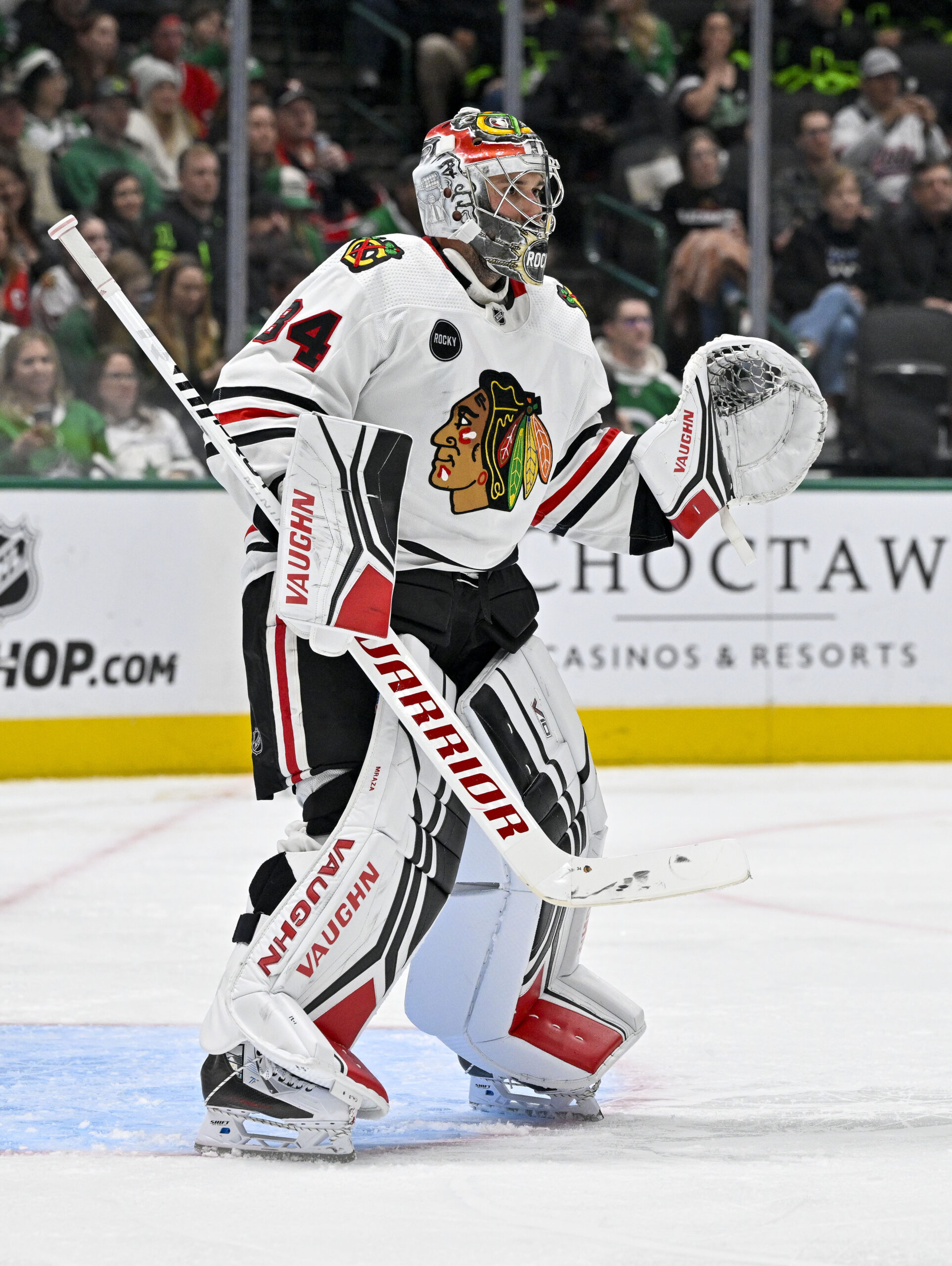 Petr Mrazek has a $4.25MM cap charge for next year which is on the high side but he’s also going to be on an expiring contract. I think it’s possible that there will be a team or two who doesn’t like the idea of signing a UFA to a multi-year deal but could afford an overpay on a short-term contract. If those are out there, then yes, I think Chicago can move him. And with two retention slots opening up on July 1st, the Blackhawks could use one to pay down part of that contract and actually get a bit of value in return (likely a mid-round draft pick). If it doesn’t happen, he’s probably on waivers and in the minors in October.
Assuming that Chicago intends to give Knight a long look, I suspect their ideal tandem for next year is him and Soderblom. Brossoit coming off an injury-riddled year has minimal value so he’d either be the third-string option or on waivers and in the minors himself assuming he’s healthy by training camp. If he and Mrazek were both in the AHL, I expect one would then be loaned to another team with the other partnering with Drew Commesso in Rockford. There’s a way to get through this with the four but if they can find a taker for Mrazek or Brossoit (which seems less likely given the injury trouble), that would certainly help things.
samwise1313: Are the Blackhawks going in the right direction?
From a longer-term standpoint, I think so. They already have one of the stronger prospect pools in the league and with nine picks in the first two rounds between the next two drafts (four first-rounders and five second-rounders), they’re set to make it even stronger pretty quickly. I think they’d be a bit disappointed with how things have gone in Rockford but they’re at least in a play-in spot so there’s a chance that young group gets a bit of a postseason taste. So as far as the long-term future goes, they’re doing alright.
But this season hasn’t been a great one. The results have been ugly under both coaches and even Connor Bedard’s sophomore year hasn’t seen him take a big step forward as expected. I didn’t have an issue with them getting some veterans to avoid having a bunch of young guys in spots they’re not necessarily ready for but they haven’t done well at moving the needle, so to speak. In terms of progression, there hasn’t been much which is not what you want to see from a rebuilding squad. In that sense, it feels like a bit of a wasted year but in the long run, they’re still on the right track when it comes to asset accumulation.
PHR Mailbag: Devils, Restricted Free Agency, Jones, Tuch, Young Defensemen, Canadiens
Topics in this edition of the PHR Mailbag include some thoughts on how an increased salary cap could affect restricted free agency, Seth Jones’ situation in Chicago, and much more. If your question doesn’t appear here, check back in last weekend’s mailbag while we still have one more to come.
JF Devs Fan: Would Anaheim accept Kovacevic for Zegras and let Z be the 3C for the Devils? Who else is a 3C the Devils can target at the trade deadline? Hopefully someone with speed, some defensive acumen, and enough offense.
Unless the Ducks just want to open up cap space and get out of Trevor Zegras’ contract, there’s no reason for them to accept the trade. Johnathan Kovacevic is a pending unrestricted free agent and would be far from a guarantee to re-sign so that would be a pretty low return for a player who they’ve had a high asking price on in the past. New Jersey, meanwhile, can’t afford to take on the $5.75MM price tag on their books for this season and Anaheim would have no interest in paying down the money. If the Ducks were to move Zegras, I suspect they’d want a similarly-established top-six piece.
New Jersey has been linked to Montreal’s Jake Evans for a while and the fit is logical. He is the league leader in playing time shorthanded among forwards so the defensive acumen is there. He’s not the fastest but he’s not a bad skater. And offensively, he’s on pace for around 35 points which is reasonable for a third liner. He also has a $1.7MM price tag this season which is something they should be able to fit in without too much issue. If Boston sells, Trent Frederic could be of some interest. He’s only a year removed from an 18-goal season and third-line minutes and would add some sandpaper.
It wouldn’t shock me if they were among the teams interested in Seattle’s Yanni Gourde. A lower-body injury will probably keep him out until the deadline but he’s due back soon after and he would certainly give the third line a boost. The Kraken would need to retain half of his $5.167MM to make a deal palatable, however. I’m sure they’d kick the tires on Brock Nelson but it’d surprise me if he was moved inside the division. Another cheaper option would be Chicago’s Ryan Donato who is having a career year offensively and has spent some time at center. The defensive acumen isn’t necessarily there but he’d be an intriguing pickup as well. GM Tom Fitzgerald should have some options if they try to make a move down the middle.
Emoney123: Is restricted free agency going to be more active/change since the cap is increasing and should Briere consider offer-sheeting someone like Wyatt Johnston?
I should start this by saying I think restricted free agency is already more active than we realize. We only find out if a player signs an offer sheet but I think there are some that are discussed every year that just don’t put pen to paper. In that sense, I don’t think it will be necessarily much more active although the success St. Louis had with their additions of Philip Broberg and Dylan Holloway might make players in that price range more palatable. The Blues didn’t have to part with a first-round pick for either player which is notable. I doubt we’ll see much more activity, however, or least activity that gets made public because of a signed offer sheet.
In theory, Philadelphia targeting a young center like Johnston makes perfect sense. In practicality, however, it makes little sense. In order to get him, they’d have to overpay to the point where it makes no sense for Dallas to match. What’s that number going to be?
Let’s look at last year’s thresholds for an example. (Keep in mind these numbers will go up this summer, too.) Anything below $6.87MM is easily matched because they’re not going to give up Johnston without getting a first-round pick in return. I think they match in the tier above that which caps at $9.16MM. So now, to have a plausible shot at getting him, do the Flyers have to offer $10MM or more a season for Dallas to really have to think about it? It’d probably have to be closer to the higher end of that tier, so now we might even be closer to $11MM. And on top of that, the deal can’t be any longer than five years which is the maximum divisor. They could offer seven years at that price point but with the divisor being five, the draft pick compensation would be pushed into the four first-round pick tier. They’re not paying four first-round picks for Johnston.
So, to recap, the Flyers would have to offer a contract that would walk Johnston to UFA eligibility at 28, paying well above market value and coughing up two first-round picks, a second, and a third for the privilege to do so if Dallas didn’t match. There’s a reason proven impactful players rarely sign offer sheets and this is it. There just isn’t a price point that scares the receiving team away while still being affordable enough for the signing team. I don’t know about you but a move like this doesn’t feel like a great move for a still-rebuilding team to make.
Unclemike1526: I’ve been watching the Seth Jones trade speculation with some interest. There is absolutely no doubt that Jones is overpaid. However, if the Hawks have to pay half his salary to move him that makes no sense to me either. Look he’s not horrible, a team cancer or negative value. IMO there is absolutely nothing to be gained by paying him to play somewhere else.
So, I guess my question is, what would be the minimum in your opinion that the Hawks could get away with to move him and make it worth their while? I’m thinking if they only had to pay $2 million a year to see him off and save $7 million a year would be worth it. Any more than that and with the Cap going up I’d keep him until they can get the years down enough to make that work would be the way I would go. What’s your opinion? Thanks.
You make an important point that I think sometimes gets lost in the speculation about trading Jones, especially now with the news that he is welcome to being moved (but hasn’t asked for a trade). It is still pretty rare for teams to retain money for more than a couple of years and he has five years left after this one. That’s a lot of money to pay a player not to play for you. On the other hand, it’s a necessary decision to make if they’re going to move him as there isn’t going to be much of a market for him at $9.5MM, especially from the standpoint of trading him for value.
The first question I asked myself when I saw this question is what is today’s market value for Jones if he was a free agent? With the cap set to rise (which partially offsets the age concern), he’s probably still in the $8.5MM range. If that’s a rough estimate of what a team would sign him for, getting it down to that price tag is necessary to deal him basically for free or for a nominal return.
With that in mind, is paying the deal down to $7.5MM that much of a needle-mover? I suppose it depends on what the end goal is here, simply clearing money or trying to get something resembling acceptable value for a pretty good player who Chicago paid a lot for not long ago. (Or, with it being a different GM in charge and not Stan Bowman, will the sunk cost fallacy not come into play?)
If the end goal is simply clearing the contract, retaining $2MM should get it done. But if they want to get any sort of impactful asset in return, that might have to go to $3MM per season. That said, spending $15+ million on a player not to play for you to get a good asset in return isn’t a great idea either. I think the better play is that they hold him for now but if it’s a case where he really wants out, then they might have to bite the bullet.
FeelTheThunder: There seems to be a lot of rumblings about Buffalo Sabres’ Alex Tuch and the Tampa Bay Lightning being linked. Granted, you always have to take things with a grain of salt per se but if there is smoke, there is fire. It’s widely reported that GM BriseBois is quite active searching for a middle six forward so the question becomes what does this potential deal look like?
Obviously, Tampa’s 2026 1st round pick would be a part of it. I assume a middle-round pick (3rd or 4th) would be added in the mix and maybe a player like Darren Raddysh as Buffalo is going to need depth on the defensive right side next season.
Now, if they ask for someone like Ethan Gauthier then we’ll be talking about a bigger trade here if Tampa is even open to moving him (I’m 50/50 on that possibility). I won’t bring up the potential Hobey Baker nominee Isaac Howard nor Conor Geekie as I feel both are off-limits. But in terms of other NHL-ready prospects Gage Goncalves could be someone to watch in the matter.
I wouldn’t necessarily say where there’s smoke, there’s fire. There’s a lot of smoke at this time of year and most of it usually doesn’t amount to anything. Most of the players a buying team will be connected to ultimately won’t be acquired.
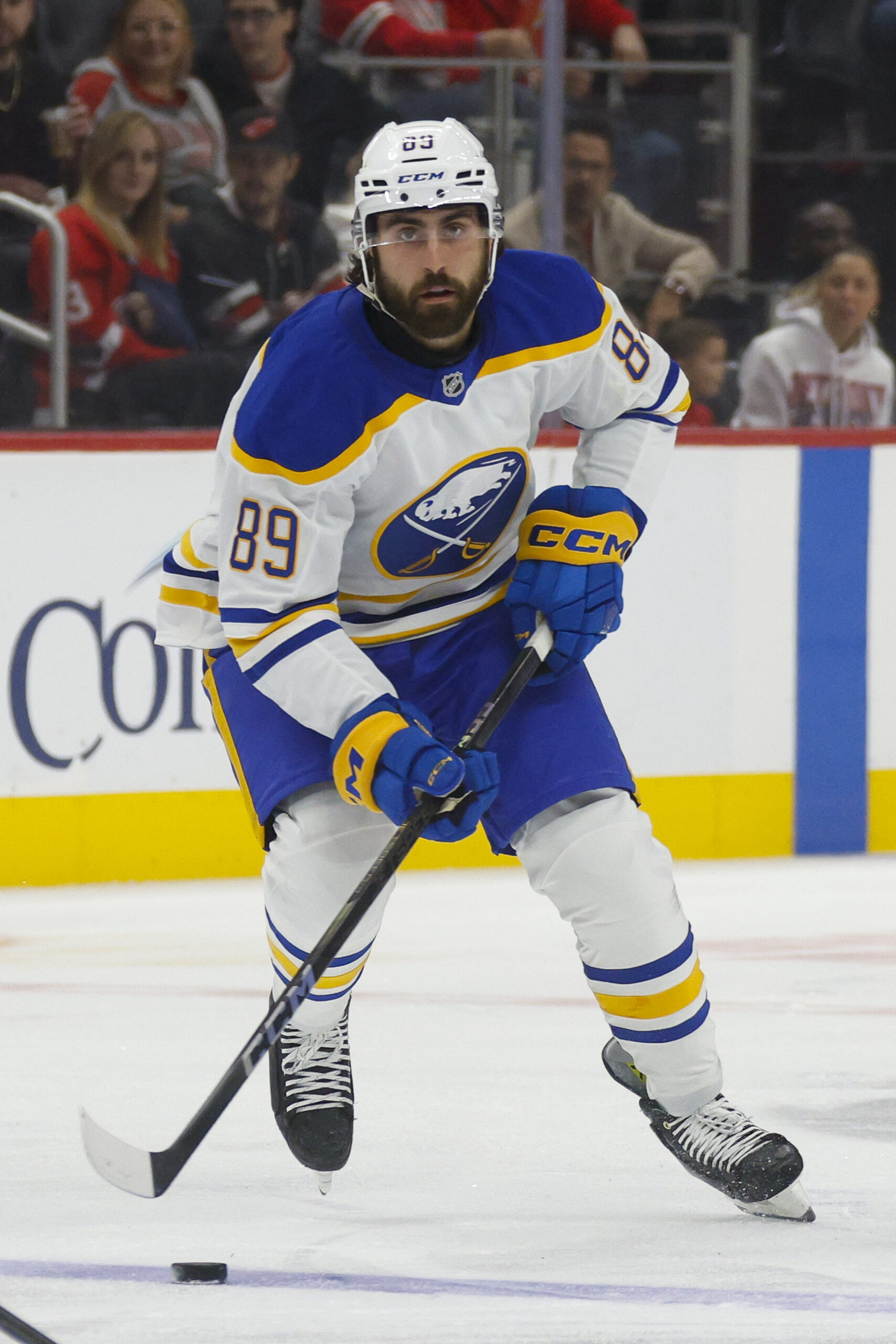 If the goal is a middle-six forward (as I think it is) for Tampa Bay, that’s not Tuch. He’s a first-liner and almost more importantly, he’s on a team-friendly contract at $4.75MM through next season. Accordingly, there’s going to be some sticker shock on the price that’s going to be paid to get him if Buffalo actually moves him. I agree that a first-round pick is a starting point but I don’t think the other two pieces are going to move the needle much. I think they’d have a use for Raddysh but he’d be viewed as a secondary addition and those usually don’t go for top-liners.
You mentioned how Gauthier’s inclusion would make it a bigger deal. I’m not so sure. Frankly, I don’t know if the Sabres would jump at him plus the first-round pick; I think someone would beat that because if Tuch was actually made available, about half the league would make a serious offer. Honestly, I doubt the Lightning have the trade chips to beat that many teams out so it’s hard to come up with a specific package. I agree that Howard is someone they probably don’t intend to move but never say never. If there’s a player with team control available that they think is a difference-maker, I don’t think any of their youngsters are truly off the table. As for Goncalves, he cleared waivers barely a month ago so that should tell you that his trade value is minimal at best.
I know there’s a lot of speculation out there about Tuch but the bulk of the reporting all says the same thing – teams are calling about him but the Sabres are giving no indication that they have any interest in moving him. Knowing that, if a team wants him, the price is going to be extremely high. And in Tampa Bay’s case, adding a top-line scorer isn’t necessarily the most realistic priority for them.
letsgonats: Is there a playoff team that would NOT want Alex Tuch?
I kind of touched on this above but I’d imagine all 16 playoff teams would at least try to make a compelling offer with some knowing their chances of landing him would be quite slim. I also think several non-playoff teams would at least kick the tires on his services in the hopes that they might be able to convince him to sign a contract extension, something that can be done as early as July 1st. With Tuch growing up relatively close to Buffalo, I think the Sabres will also be planning on taking a run at signing him to a long-term extension as well. If he was actually made available, he might be the most sought-after player in these next couple of weeks.
PHR Mailbag: 4 Nations, In-Season Tournament, Midseason Break, Suspensions, Schenn, Sabres, Capitals, Montembeault
With the 4 Nations Face-Off now underway, our latest mailbag focuses on that with a couple of other topics sprinkled in. If your question doesn’t appear here, check for it in one of our next two mailbags.
Black Ace57: It feels like the only people excited for the 4 Nations are media members promoting it. It doesn’t compare to the World Juniors or the Olympics. Instead of trying to copy other international tournaments has the NHL considered doing anything like the NBA in-season tournament?
This was something that NHL Commissioner Gary Bettman was asked about before and while he didn’t come out with an outright no, it doesn’t seem to be something they’d seriously consider. It’s also a bit of a scheduling nightmare as the NBA has to do part of its schedule midseason as all of the teams eliminated from contention have to have a couple of games scheduled on short notice. If they can do it, the NHL can but that would undoubtedly be cited as a reason against trying it.
The NBA’s in-season tournament has only been around a couple of years but I feel like this season lost a lot of its intrigue from the first. From the pieces of games I saw, it’s not as if teams were playing any harder with the potential of moving on in the tournament. It all felt a little too random so I’m not sure copying that format is the right way to go, not unless its popularity really rises in the future.
What the NHL could do if they wanted to do something to dress up some regular season games could be some regional challenges. The seven Canadian teams have six games designated as Canadian Challenge Cup games and the team with the most points out of those wins a trophy and the players get a small bonus. The three California-based teams have two head-to-heads against each rival designated as a mini tournament, stuff like that where it’s not just a random grouping. It certainly doesn’t work to put all 32 teams into a logical region though so it’s far from a perfect idea.
They could also group by division (instead of random groups like the NBA does) and just designate a certain number of games as ‘tournament’ matchups. There are options if they want to do something, I’m just not sure it’s actually worth them doing anything with this.
Pyramid Headcrab: What’s the real reason for the winter break every season? Obviously, players need a break from travel, and fair dinkum… But is that something they negotiated in the collective agreement? Or does the break exist for a different, but equally practical, reason?
Cuz I think we all know nobody cares about the All-Star Game or the Four Nations Whatever.
This isn’t a direct CBA element but is actually related to the All-Star Game. When the change was made to go to a three-on-three format, the NHL had to agree to this as a concession to get the NHLPA to agree to the format switch as, in theory, there’s a lot more skating involved at three-on-three. (In reality, the All-Star Games aren’t played at remotely close to full speed but I digress.)
In general, the idea is that without the bye week, the NHL’s top stars don’t exactly get a lot of rest. They play to the break, fly in for the All-Star event, then are back in action a couple of days later and some feel that’s not fair to them. By doing the bye weeks, they ensure that the stars at least get some time off while it’s around the time of year when all teams could benefit from some extra days off to heal up some of the nagging aches and pains.
As for no one caring about the All-Star Game, I disagree. It has an audience it caters to, it’s just not so much the established fans. They try to promote things for the younger demographic that they’re trying to hook as fans while there’s a major corporate element to it as well with a lot of the league’s top sponsors being involved. As long as those two things are in play, the All-Star Game will continue…even next season when the in-season break will be even longer for the Olympics.
FearTheWilson: If a player happens to receive a suspension during the Snore Nation’s tournament, does the suspension carry over to the NHL season or does it count towards international play?
The 4 Nations Face-Off is not an IIHF-sanctioned event. That’s why there’s no break in those leagues for players (or coaches) to possibly take part which is what made this an NHL-only tournament. Accordingly, any suspension would be applied against NHL games, not international.
While we’re on the subject of not being IIHF-sanctioned, it doesn’t seem as if the 2028 World Cup event will be either. That will likely complicate things for some of the countries that don’t quite have enough NHL players to form a full roster. In a press conference earlier this week, Bettman alluded to needing to “work with each country’s federation to find a balance” when it comes to player participation so there are going to be some hurdles to clear for three years from now.
Gmm8811: Is there a roster freeze during the 4 Nations? Can trades still be made? Where would be the best fit for Brayden Schenn if he waives his NMC? Realistic return for him?
Since this question was posted, we have seen a very minor trade which kind of answered this one for me already. But there is no roster freeze and teams are free to make any moves as long as they remain compliant with the salary cap and roster rules (teams have to have two goalies, six defensemen, and 12 forwards on their active roster). I’ll be honest, I thought we’d see another trade or two by now so that when teams come back to practice next week, the potential acquisition would get lots of practice time. Of course, I also suspect that teams were quietly discouraged against doing anything that would take attention and focus away from the tournament so maybe that’s playing a role as well.
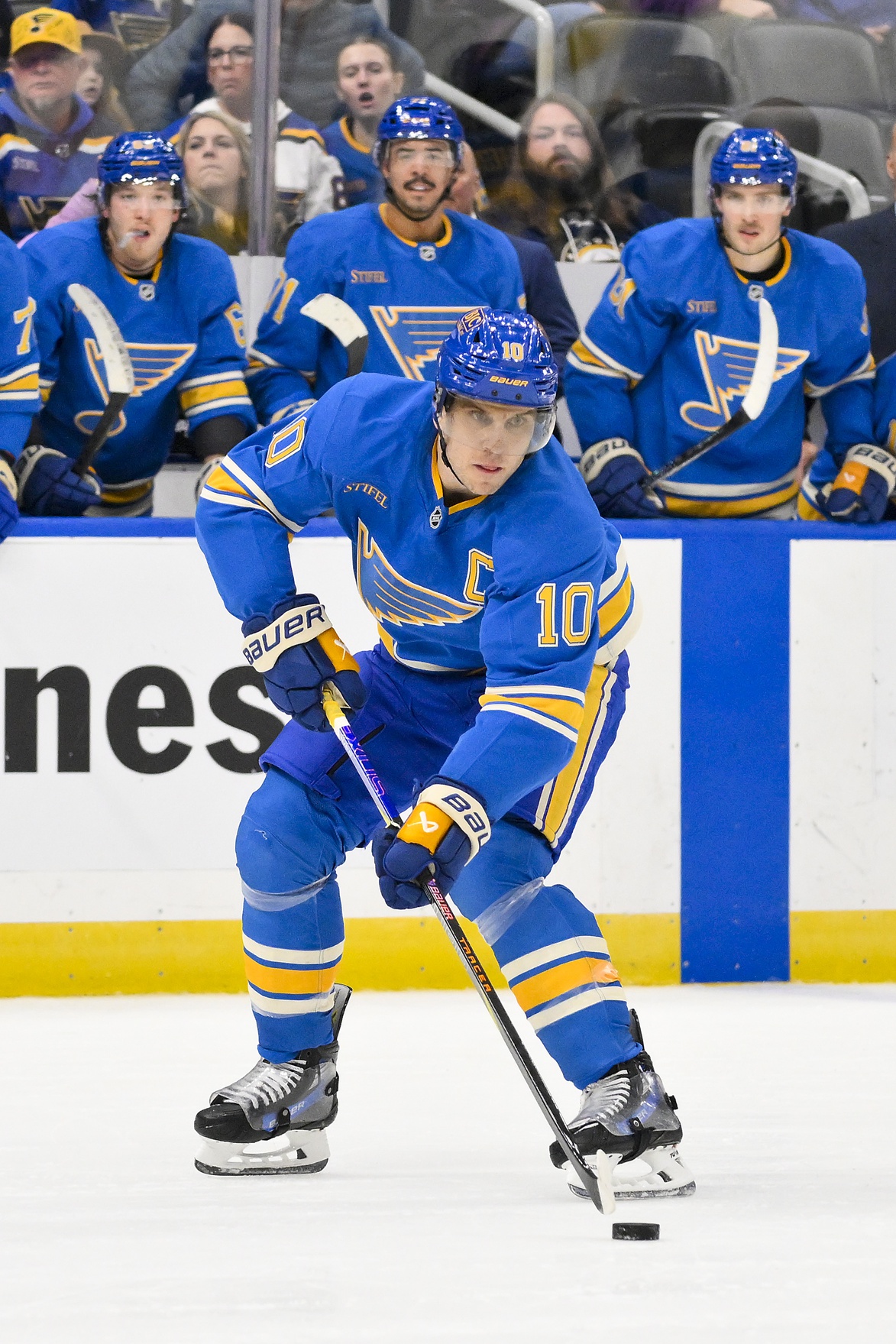 Now, onto a couple of non-tournament questions for now before getting back to them later on. Staying in the Central Division is probably the best fit for him. Colorado has been looking for center help since they lost Nazem Kadri and Schenn doesn’t quite have the offense Kadri did now but he’d still be quite impactful. Winnipeg has been looking for a longer-term second middleman for years now with minimal success. And Minnesota has a genuine need for more center depth at a minimum and with continued whispers about Marco Rossi that don’t seem to be going away (despite GM Bill Guerin trying to tone that down a while back), adding Schenn would at least give them some more flexibility if they wanted to do something with Rossi. I could even make a case for Utah here. I know trading a core player within the division doesn’t happen a lot but there are enough strong fits that could net St. Louis a strong return.
As for that return, I think it’s fair to say that it would start with a first-round pick. Yes, a $6.5MM price tag through 2027-28 for a 33-year-old is a little high but with the big jump coming in the salary cap, it becomes a lot easier to absorb. Not to the point where it’s an asset by any stretch but it shouldn’t be a deterrent now. It wouldn’t shock me if they were to land another first-round-caliber asset either though not necessarily a draft pick but rather a prospect or young player who’s either in the NHL or close to being ready. I doubt the Blues are going to flip the switch to do a long-term rebuild so an all-futures return doesn’t seem likely. It also wouldn’t shock me to see them take a veteran player back to help offset some of the money as I doubt they’re going to retain salary to make a move happen. It’s a big price but with the dearth of quality centers available, I think they could get it if they move him.
sabres3277: Do you believe the Sabres will make the inevitable GM change during the break to allow an interim GM to handle the trade deadline? I think this could happen because Adams is clearly out of his league when trying to make deals etc. The fanbase has had it with the incompetence that he has shown in trying to end this disgraceful playoff drought.
It hasn’t happened yet so it’s safe to say that it’s not going to happen. Frankly, if a team had concerns about their general manager, they wouldn’t let that person stay in place this close to the trade deadline. By all accounts, Kevyn Adams has been working the phones in recent weeks on the trade and contract front so this is his team to lead through the deadline.
While the Flyers are a recent notable exception, general managers generally don’t get let go right around the deadline. Instead, changes like that often come after the regular season ends. If Buffalo does decide to make a change at the GM position, I think it will be made in April as the playoffs are about to start. Doing something now would surprise me.
Submit Your Questions For The #PHRMailbag
The 4 Nations Face-Off will provide a breather from day-to-day transactions, leaving general managers added time to focus on what the next month may entail for their clubs before the March 7 trade deadline. There have been multiple big swaps already, but more are still to come, with Dylan Cozens, Seth Jones, Brock Nelson, and Rickard Rakell among the names who could be on the move.
With that in mind, it’s a good time for our next mailbag segment. Our last one was split into two parts. The first included forward targets for the Lightning, the likelihood of the Panthers retaining both Sam Bennett and Aaron Ekblad, and whether Jakob Chychrun will stick with the Capitals, among other topics. The second discussed offer sheet strategies for the summer, additions the Flyers could make to pair with Matvei Michkov, and whether Zach Werenski can bring a Norris Trophy to Columbus.
You can submit a question by using #PHRMailbag on Twitter/X or by leaving a comment down below. The mailbag will run on the weekend.
PHR Mailbag: Offer Sheets, Flyers, Werenski, Rossi, Soderblom, Islanders, Standings
Topics in this edition of the PHR Mailbag include Zach Werenski’s Norris candidacy, forecasting the next contract for Marco Rossi, and much more. If your question doesn’t appear here, check back in last weekend’s mailbag while we’ll run one more next weekend as well.
Gmm8811: It’s looking like the Broberg/Holloway offer sheets have worked out really well for the Blues. Do you foresee more GM’s taking a harder look at that option in the future? Thoughts on next year’s steals?
At this point, the Blues certainly have to be happy with how things turned out. Philip Broberg is a legitimate top-four defender for them and Dylan Holloway has blown past his career bests offensively and turned into a capable top-six winger. For what it’s worth, Edmonton pivoted relatively well with their low-cost replacements of Ty Emberson and Vasily Podkolzin, given the circumstances. Those two aren’t playing at the level Broberg and Holloway are now but they are playing to the level those two likely would have performed at had they stayed with the Oilers.
That type of success story should make general managers a bit more willing to look into offer sheets as an option although I do think more of them get floated around than we ever see. We only find out when one is signed, not when one is discussed between teams and agents. With another fair-sized jump expected in the salary cap, there’s definitely going to be a chance for a strategic offer sheet or two this summer.
The challenge is finding a team that will be cap-strapped early in free agency. There will be plenty, sure, but identifying them now isn’t as easy as there are many signings and trades to be made over the next six months. It’s also finding a younger player who wants a shorter-term deal as with the divisor for offer sheet compensation only being a maximum of five (even on a contract longer than that) cranks up the draft pick cost too high to be worthwhile.
If Florida finds a way to re-sign or replace both Aaron Ekblad and Sam Bennett, they’re going to have to look at low-cost deals to round out their roster. That could make someone like Mackie Samoskevich a bit vulnerable as the Panthers would probably prefer a cheap one-year contract while he could command a two-year or three-year deal from a team that sees him playing a bigger role and is willing to pay him accordingly. If Seattle re-signs or replaces Yanni Gourde and Brandon Tanev, that might push them into a lower-cost deal with Ryker Evans so I think teams would sniff around that but he seems less likely. If the Stars are active between retaining or replacing their veterans, they could be vulnerable if they force themselves to pursue shorter-term agreements with their RFAs. Wyatt Johnston probably isn’t attainable but if there’s a team that really believes in Mavrik Bourque, I could see him garnering offer sheet interest as well.
Emoney123: Is there a trade or potential 2025 free agent the Flyers can pair with Michkov?
From a UFA perspective, it depends on whether Philadelphia views Mikko Rantanen as a center, a position he has played off and on with Colorado. If Rantanen wants to go for top dollar (which likely takes him off the table to re-sign), the Flyers are one of the teams that would have enough cap space that they could plausibly afford him without needing to do much subtraction from their roster. I suppose Mitch Marner fits as well if Matvei Michkov switches to the left wing as a left-hand shot but is that too much raw playmaking on one line? That said, if the Flyers had a shot at adding a top talent like that, do it and figure the rest out later might be the best approach there.
On the trade front, Vancouver seems like the team to try to make a move with if they ultimately decide to move one of Elias Pettersson or J.T. Miller (who has full no-trade protection). Legitimate top centers don’t come available too often and while both players have recent question marks, they also have a proven track record of recent production. The cost for either would be significant, both in terms of current and future assets and with the Flyers still being in the build-up stage, a swap like that might not be at the most optimal time. But again, with the scarcity of those types of players being traded, that shouldn’t dissuade GM Daniel Briere from inquiring at least about what it would cost to get one of them.
bottlesup: It might be a bit early, but is it safe to throw Werenski’s name into the Norris conversation?
I’d say it’s very safe to have Werenski in that mix. He’s among the league leaders among blueliners for points, plays in all situations (all-around ability is right in the criteria for the award), and leads the NHL in average ice time. When you’re in the mix offensively with the likes of Cale Makar and Quinn Hughes, you’re definitely doing something right. He has undoubtedly played a significant role in the Blue Jackets surprisingly finding themselves in the battle for a playoff spot at the midway mark of the season, an outcome few would have seen coming.
I expect that their playoff situation will ultimately dictate whether he wins the award. That, and staying healthy, of course. It’s not unprecedented that a non-playoff blueliner wins it as Erik Karlsson did just two years ago. However, his numbers were so far and beyond the rest (he had 25 points more than any other defender) that they were enough of a difference-maker. Werenski isn’t going to have that luxury. If the Blue Jackets come up short of a playoff spot, he’ll probably land plenty of second and third-place votes but that won’t be enough to win. But if they get in, he’ll be the driving reason why which should sway lots of first-place votes his way and make the difference.
Zakis: What does a Marco Rossi extension look like?
Why are the Iowa Wild perpetually bad and has that had influence on prospects seemingly not reaching another level (thinking Hunt, Lambos, Jiricek)?
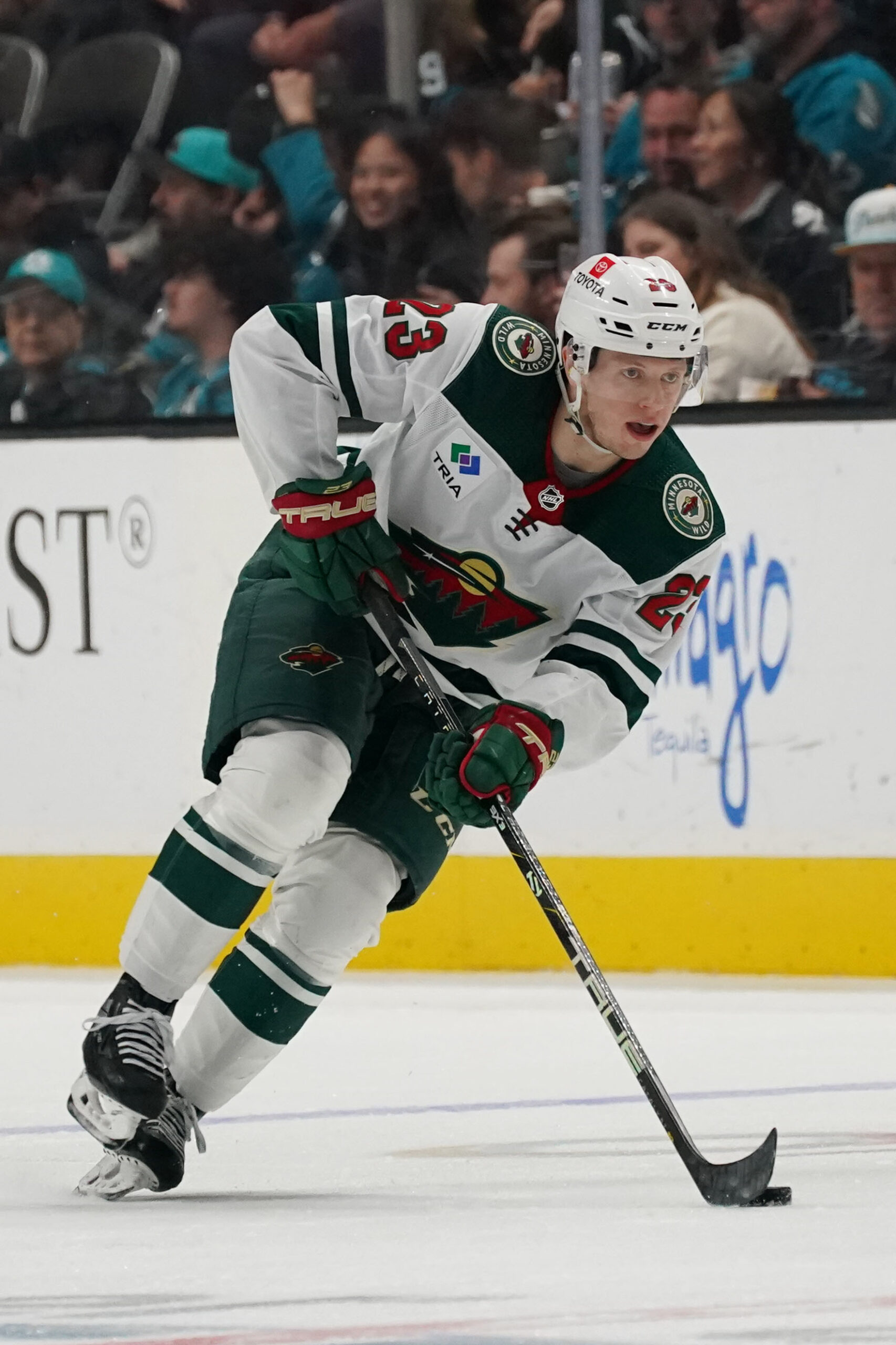 Back in the summer, I basically pegged Rossi’s range as a bridge deal starting with a three or a long-term deal starting with a five if he had a season similar to 2023-24 this year. That clearly isn’t happening since he’s already nearly matched his point total from a year ago in half the games. That’s certainly going to change the numbers. The bridge deal now will probably start with a four and a longer-term agreement that buys out UFA years coming closer to the $7MM range depending on how many years it buys out. (And if he produces at an even higher rate in the second half, those numbers will go up even more).
Despite the strong showing this season, I tend to lean toward the bridge deal for Rossi. There has been a lot of smoke about the Wild not being fully sold on Rossi (who’s undersized for a center) and while the team has tried to quash that, I don’t think they’re going from being uncertain about him to handing him a long-term deal. I also expect Minnesota to take advantage of their cap space and try to make a splash or two in free agency (or on the trade front) that might push them to have to go that route anyway.
As for the farm team, I didn’t realize the history was that bad. For those who don’t follow Iowa, in their first 11 years of existence, they made the playoffs once and lost in the play-in round once. There has been considerable turnover in terms of their coaching along the way as well. Without watching them closely, I can’t begin to assess what’s happening beyond simple guesswork which doesn’t do any good.
I don’t think it’s fair to put David Jiricek in that group considering he’s barely been with them for a month but I would suggest that yes, a continuous losing environment doesn’t help from a development perspective. Sometimes it’s good to have more prospects meaning the youngsters are getting playing time but I believe there’s value in being in a good spot, playing meaningful hockey, and seeing some playoff action. It’s hard to objectively state that yes, that held some players back from getting to another level – it’s not that simple, obviously – but I’d say it hasn’t helped.
Unclemike1526: Not being able to watch the games this year, I’m just curious is Soderblom that much better or is it just a mirage? After being able to watch the last three games I’m not exactly missing watching them anyway. It would be nice to get an opinion. I’d dare say right now Soderblom is the best G on the Hawks since Laurent Brossoit can’t play. As bad as Soderblom was last year it’s hard to believe he is that much better.
It’s a combination of a couple of things. Arvid Soderblom is still young (he’s 25) and it was reasonable to think he’d bounce back, at least to a point after a tough 2023-24 season. Also, year-to-year volatility for goalies is pretty common, especially younger ones; if veterans can have big swings in performance, so can the unproven ones. I wouldn’t necessarily say it’s a mirage, it’s just a young goalie who hopefully improved after a tough year and with less than 20 appearances, it’s still too early to say much conclusively.
With Brossoit out and Petr Mrazek a veteran placeholder, you’re absolutely right in that Soderblom is their best option right now. And with the Blackhawks going nowhere in the standings this year, they should be going to Soderblom more often right now so that they can better assess him. There’s a reason why he was their goalie of the short-term future not long ago and a reason why they had to go add Brossoit in the summer since he played so poorly last year. Right now, they need to get a better sense of what they have and see if he’s still part of the future plans.
PHR Mailbag: Lightning, Panthers, Chychrun, Hughes, Kings, Jets, Spengler Cup
Topics in this edition of the PHR Mailbag include the cap crunch the Panthers will be facing as they look to re-sign two key unrestricted free agents this summer, options for the Jets to solve their roster needs, and much more. With so many questions this time around, we’ll break them into three separate pieces instead of the usual two.
FeeltheThunder: As a Tampa fan, I’m wondering the type of combo Tampa will go for in the trade deadline. Tampa is a much-improved team from last year (night and day, really). I feel Tampa may go for one or two forwards to add more additional depth to their middle/bottom six group like they did a few years ago with Brandon Hagel and Nick Paul (that’s worked out quite well). They have a pretty good defensive group overall and have some depth so I don’t know if adding a defensive piece is necessary. What do you think of the combo they’ll go with and who may the targets be?
I feel one name for starters (if available) Jake Evans from Montreal has a number of qualities Tampa tends to aim for in a player and Tampa/Montreal have traded in the past.
In follow-up comments, you also mentioned Luke Kunin (who I’ve tossed out before as a possible fit for them) and Will Cuylle (who might be one of the more untouchable Rangers at the moment). I still like Kunin as a fit for them. If memory serves, I had Mikael Granlund on that list previously, assuming they can make the money work with the Sharks out of retention slots. I think he’s still a good fit for them too.
Evans is a good one as well although the asking price on him is going to be fairly high with the start he’s off to this season. At a $1.7MM cap charge, he’ll be affordable for a lot of contenders which will drive up the acquisition cost. If Buffalo sells, Jordan Greenway could be viewed as trying to refill the Tanner Jeannot slot, probably at a much lesser price point than what was paid to Nashville to get Jeannot. Another center that could interest them is Sean Kuraly, someone who can kill penalties and play with an edge. If Utah sells, Nick Bjugstad could also fit the bill.
If they go for two forwards, it’ll be a center/winger combo (and if they wound up with someone like Kunin who plays all three positions), even better for them. Aside from Granlund, all are cheap enough that Tampa Bay could afford them outright without necessarily needing retention at the trade deadline if they’re able to stay healthy between now and then.
Having said that, it wouldn’t shock me if one of their additions is on the back end, looking for a third-pairing upgrade. Someone who can kill penalties, play with an edge, and give them a bit more depth in case injuries arise. In essence, something like the David Savard move a few years ago (just not at the cost of a first-round pick). Depending on what happens with Savard in Montreal and what they look to do up front, he could be a potentially plausible fit again.
Sunshine swede: Do you think Panthers can extend both Ekblad and Bennett? Guess Bennett will earn a raise, while Ekblad might have a cut. What do you think about their next deals?
Keeping one is definitely doable but both could be a challenge. Per PuckPedia, they have $72.5MM in commitments on the books for next season already to 15 players. If the salary cap lands around the $92MM range (some could see it going higher but for now, that’s the 5% allowable increase), that gives them a little less than $20MM to work with, a bit less than that if they want to leave themselves some in-season wiggle room.
Coming into the season, Sam Bennett was probably looking at a long-term deal in the $6.5MM range. Given the dearth of impact centers set to become an unrestricted free agent and the fact he’s on pace for career highs offensively across the board, it stands to reason that he could push past $7MM on his next deal. Frankly, something along the lines of Aaron Ekblad’s current price tag ($7.5MM) wouldn’t shock me given his playoff success.
As for Ekblad, he’s also set to benefit from a fairly weak UFA market; it’s basically between him and Neal Pionk for the top veteran right-shot option available. While he’s not the big point producer he was earlier in his career, he still plays a big defensive role, logs heavy minutes, and is on pace for around 40 points again. I could see a small cut in his pay but I could also see a long-term deal at that price tag again depending on how many teams are serious about bidding for him.
If the two of them cost, say, $14MM combined, now you’re down to only around $5MM to re-sign Mackie Samoskevich and sign a couple of depth forwards and depth defenders. That’d make it tough to do anything to materially improve the roster. Of course, losing one of those two would certainly hurt things as well. I think the likeliest outcome is that they only keep one but if they really want to make their roster more top-heavy, there’s a way to keep both of them around and then restructure a bit once their $14.5MM goalie tandem sees their contract expire in 2026.
2012orioles: Is a Jakob Chychrun extension with the Capitals going to happen?
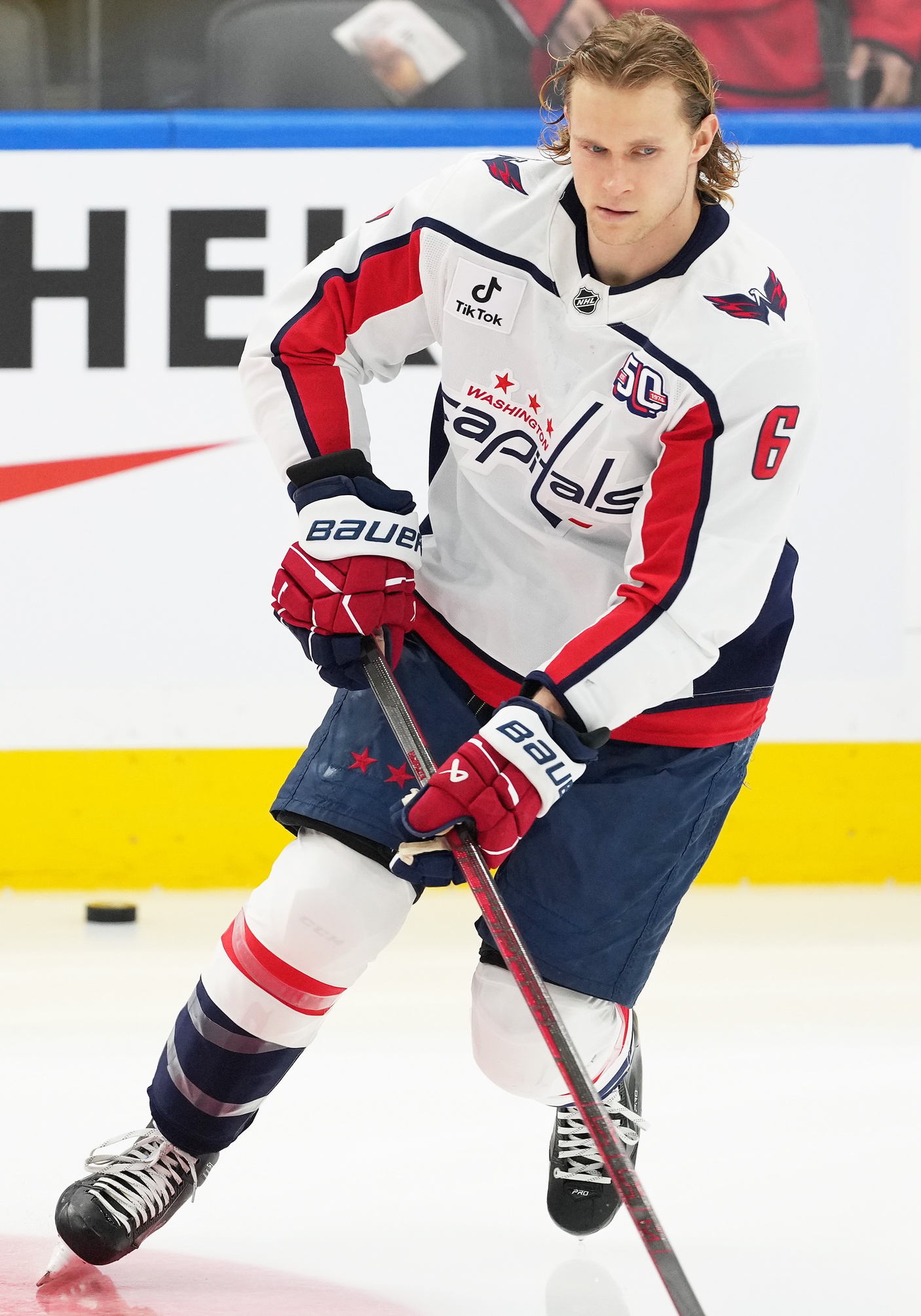 Last month, Chychrun indicated to Sportsnet’s Luke Fox that he could see himself re-signing with Washington. And frankly, it’s easy to see why. The Caps have been one of the biggest pleasant surprises of the season with their roster makeover during the summer paying dividends with Chychrun playing a big role in that. He’s on pace for a career year offensively with 11 goals and 14 assists in just 33 games. His shooting percentage (15.1%) is a lot higher than his career average so there might be a bit of regression coming on the goal front but even so, he should blow past his personal benchmark of 41 points as long as he stays healthy. In a contract year, that’s great news for him.
That next contract is going to be quite pricey, however. He was probably in the $7MM range heading into the season and with the year he’s having offensively and the talk of a salary cap increase of more than 5%, it wouldn’t be shocking to see his next AAV start with an eight. That might seem high but he’ll be 27 when he hits the open market; whoever signs him will be getting several of his prime years.
Can the Capitals be the team that gives him that contract? I think they can be. Per PuckPedia, they have $63.7MM on the books for 2025-26 with 14 players signed. Granted, they need to sign a goalie tandem that will cost a lot more than the sub-$2MM they’re paying this year but there’s room for another big-ticket deal on the books. Having said that, a Chychrun extension would push them past $30MM (probably closer to $32MM) on their back end so they may want to trim a bit. But they can afford it and he’s a very good fit. I think they can get it done.
DevilShark: What do you see as Hughes III ceiling in Norris voting this year? Could he crack the top 10?
Let’s recap his first half of the season. Luke Hughes has three goals and 15 assists in 33 games so far. Decent offensive numbers, sure, but hardly worthy of award consideration. It’s even a step back from his per-game production from last season. On top of that, his playing time is down by nearly two minutes a night from last year. He sits fifth among New Jersey defenders in ATOI as a result.
Is this realistically the profile of a player who should be in consideration for the Norris Trophy as the NHL’s best defenseman? Logically, doesn’t Hughes need to be New Jersey’s top blueliner to be even considered for the award? While it’s worth noting that the Devils run three very balanced pairings, I don’t see a case to be made for him to land on a ballot let alone finish in the top ten in voting.
It wouldn’t shock me for Hughes to one day land in there. Once he takes on a bigger role and if he can become the type of highly productive blueliner many project him to be, he’ll get into that range. But that’s not going to happen this season.
rpoabr: What’s the trade that puts the LA Kings into true Cup contention? Doughty coming back soon (hopefully) should already be a boost.
Drew Doughty’s eventual return will be the biggest boost they get. Adding a legitimate number one blueliner to the roster puts the rest of the back end in a more optimal spot on the depth chart and gives them a bit more depth in general. If they stay healthy the rest of the way, they probably don’t need to make a move to add defensive depth so we can scratch that off the list of trade options.
But here’s the problem. When Doughty returns (probably later this month), that’s the end of their cap space. The Kings are operating in LTIR which means they haven’t been banking cap space. Right now, they have lots to spend with an LTIR pool of more than $10MM. When he comes back, they have to start trimming players to get back into cap compliance. That puts them in a spot where they’re going to have to match money or get double retention on a player. That means there isn’t a trade available to them this season that’s going to vault them into true Cup contention.
What could help put them into at least semi-contender status would be adding a top-six winger to help get them out of the middle of the pack offensively. Making the money work would require double retention but players like Jason Zucker and Kyle Palmieri come to mind, players that will boost their middle six and should be acquirable for a package starting with a second-round pick. But even with that, when you’re in a division with Vegas and Edmonton, they’re going to be hard-pressed to get to true Stanley Cup contention no matter what move(s) they make.
Submit Your Questions For The Next #PHRMailbag
With the holiday break in the rearview mirror, it’s time for the next edition of Brian La Rose’s PHR Mailbag.
Last month’s edition ran in two parts. The first dealt with some potential cap dumps, some Central Division teams’ interest in defensemen on the trade market, and the playing future of Avalanche captain Gabriel Landeskog. The second covered the state of the Flyers’ rebuild, potential buy-low trade candidates for the Canadiens, and some of the best off-season pickups.
You can submit your questions in the comment section below or by using #PHRMailbag on X/Twitter.