
Snapshots: Amnesty, Lucic, Game Audio, Hajek
Despite the hopes and dreams of fans around the NHL, the agreed-upon return-to-play conditions and extended CBA is not likely to include any kind of amnesty clause, per TSN’s Bob McKenzie. The assumption that the salary cap will hold at $81.5MM for the next two seasons gave rise to some speculation that the stagnant cap would be augmented by an amnesty provision, but it appears teams will be stuck with the contracts they’ve got on the books. For the Calgary Flames, that means Milan Lucic, writes Todd Cordell of Hockey Buzz. Lucic has three more years on his deal worth $5.25MM per season. The 32-year-old Lucic hardly set the world on fire in his first season in Calgary, notching just 20 points (8 goals, 12 assists) across 68 games. The Flames acquired Lucic and a conditional 3rd round pick for winger James Neal after one disappointing season in Calgary produced just seven goals. The money owed Lucic isn’t exorbitant, but it’s not an ideal price tag for an aging winger entering his mid-thirties. Lucic still played a role on the Flames’ third line, but his days as a 40-60 point scorer appear behind him. Additionally, it’s unclear right now if the Flames will actually receive the third-round pick. To get the pick in this year’s draft, Neal had to score at least 21 goals and record 10 more goals than Lucic. The second condition was qualified, but Neal scored just 19 goals – in a shortened season. Common sense would look at those numbers and say Neal was going to qualify both conditions, but it’s not entirely clear.
- When the NHL returns to television, the game may look the same – except for the leagues of empty seats in the background – but the audio experience may provide an even more jarring change, per Kevin McGran of The Star. Without access to players, the play-by-play commentators are likely to call games from a studio instead of the arena, and in terms of sideline reporting, well, there won’t be any. Studios are still working on the best way to pump in ambient sound, whether that’s highlighting sounds from the ice or using some kind of fan track. The most entertaining option would almost certainly be to mic the players, but that would require players to curb their vulgarity, which, in the heat of the moment, might be too great an ask.
- Libor Hajek of the New York Rangers has hired Octagon as his representation, tweets agent Allan Walsh. The young blueliner appeared in 28 games for the Rangers this season, recording five assists but no goals. Walsh also represents NHL players like Marc-Andre Fleury and Brock Boeser.
Next Steps To Finalizing Toronto and Edmonton As Hub Cities
It’s been a long and arduous journey, and there’s plenty more road left to clear, but it appears as if the NHL and NHLPA have a framework in place to settle all their outstanding issues, writes TSN’s Frank Seravalli. The deal has yet to be finalized, but when it is, it’s expected to include an extension of the current CBA, some of which we went over here, as well as the final details of the return-to-play initiative. Plus, of course, there’s the final announcement about the hub cities.
Multiple sources at the Athletic, however, confirm Bob McKenzie of TSN’s initial report that marked Toronto and Edmonton as the NHL’s chosen locations for hub play, per The Athletic’s Michael Russo. The 12 participating teams from the Western Conference would play in Edmonton, with the 12 Eastern Conference clubs headed to Toronto. Of course, that means that both the Maple Leafs and Oilers will have the “advantage” of playing in their home city. The NHL doesn’t view this as much of an advantage, however, given that fans won’t be in attendance. Besides, there’s at least a chance that neither the Oilers nor the Maple Leafs would advance past the Qualifier round.
Not to mention, there remain obstacles to finalizing the plan as currently constituted. Seravalli kindly laid out the next steps: “Once a deal is finalized, it will require ratification votes from both the NHLPA’s full membership and the NHL’s Board of Governors, which could come as soon as this weekend. A simple majority vote is needed from the NHLPA; a two-thirds vote is required from the BOG.”
Still, after hemming and hawing for weeks to finalize these details, it does appear as if the NHL and NHLPA are close to pulling off the monumental task of coming to an accord in just a manner of days.
Latest On CBA Talks
While there won’t be a flurry of agreements on contracts for next season today which is often the norm on Canada Day, it appears that significant progress is being made in CBA discussions. Here is a roundup of the latest news and notes:
- Signing bonuses that were scheduled for today will be paid and not deferred to the beginning of the next league year, reports TSN’s Bob McKenzie (Twitter link). However, with today being a holiday in Canada and Saturday being one in the United States, the payments may not physically be made until next week. The escrow rate is still yet to be determined as well.
- An interim extension has been agreed upon with regards to player contracts that were initially set to expire today, notes TSN’s Frank Seravalli (via Twitter). While not specified, the extension would likely run until the start of the next league year which, as things stand, is likely sometime in mid-to-late October. Seravalli adds that players will be allowed to opt out of returning to play for the upcoming postseason if they so desire.
- Players that were hoping to sign entry-level deals and be eligible to play in the play-in round/playoffs will not be able to do so, tweets McKenzie. However, as CapFriendly points out (Twitter link), today remains the last day for players signed for next season to sign a 2020-21 contract until the opening of the free agent market; it had been June 1st but had been extended. Barring another extension, a decision will still need to be made on whether those players could sign for this season and burn a year of their contracts without actually playing.
- Included in the CBA discussions was a cap on capping the year-to-year variability on salaries as well as limit on signing bonuses, reports Sportsnet’s Elliotte Friedman (Twitter thread). Whether or not those were successful remains to be seen. Meanwhile, Friedman reiterated that the expected salary caps for the upcoming seasons are $81.5MM in 2020-21 and 2021-22 and $82.5MM in 2022-23. That will certainly present some challenges for teams that already are tight to the current $81.5MM Upper Limit as well as ones that have pending new deals that will take them to that level.
The CBA extension remains a part of the NHL’s Return to Play plan which is expected to also feature more concrete deals of the final two phases of that plan – training camps and the hub cities. The contenders for those hubs seem to be changing regularly but the most recent forecast has Toronto and Edmonton in the lead although CBC’s Devin Heroux relays (via Twitter) that Toronto Public Health has not been notified of any selection from the league just yet. This final package, assuming it’s officially agreed upon, will need to be voted on by all of the players and not just the team representatives; that process will take a few days at a minimum.
Olympic Participation Expected To Be Included In Next CBA
One of the fundamental disagreements between the NHL and NHLPA came to a head back in 2018 when the league decided to not allow its players to go to the 2018 Winter Olympics in Pyeongchang, South Korea. While the players wanted an opportunity to play in a best-on-best tournament, the league was unable to reach an agreement with the IOC on covering costs and marketing rights and ultimately decided it wasn’t worth shutting things down for more than two weeks midseason to allow NHL players to participate.
Recent comments from the league about the 2022 Olympics in Beijing, China, suggested that the NHL was taking a similar stance but it appears that won’t be the case now. Sportsnet’s Elliotte Friedman reports that the CBA discussions (which have been gaining steam) would include the players participating in the 2022 Games. Pierre LeBrun of TSN and The Athletic takes it a step further (Twitter link), indicating that 2026 in Italy (Milan and Cortina) is also currently part of the agreement. Of course, both added the qualifier of negotiating an agreement with the IOC which isn’t a guarantee given what happened two years ago.
The current pandemic could also play a role in things, not only if it extends for a while yet but also on the schedule for that season. 2020-21 is expected to start in December at the earliest and run some time into the early summer. Knowing the Olympics cause a sizable gap in the schedule for 2021-22, it’s going to be difficult to bump up the start time for that season with the preceding playoffs running long. Accordingly, if this comes to fruition, we could be seeing playoff hockey in the summer not just this season (if they are able to get back to action) but for the next two as well.
Latest On Negotiations Between NHL, NHLPA
We’ve been awaiting the announcement for hub cities for almost a week now, and the wait for the NHL’s final decision will continue until tomorrow at the earliest, per TSN’s Bob McKenzie. Two hub cities will be chosen from the group of Las Vegas, Edmonton, Toronto, Chicago, and Los Angeles. The decision, however, cannot be made in a vacuum, hence the delay. The NHL and NHLPA are also discussing the logistics of phases 3 and 4 of the return to play initiative, as well as particulars of the CBA, tweets Louis Jean of TVA Sports.
Coming to terms on an extension for the Collective Bargaining Agreement is a particularly daunting task given the short timetable and potential long-term impact of any accord. The escrow cap and revenue sharing are significant fiscal negotiations that could hold up a swift agreement between the league and the players. Some players, such as the Rangers’ Artemi Panarin, have been vocal about needing to fix escrow before players report to camp.
There is some cause for urgency, especially with the impending July 1 date for when teams are supposed to pay out signing bonuses. There’s talk of deferment, but nothing conclusive. As it stands today, over $300MM in bonuses are scheduled to be paid out by Wednesday. There is also the issue of the salary cap, which is likely to remain at $81.5MM for the next two seasons, per McKenzie (Twitter links). These issues are not supplemental. Rather, they are some of the most crucial points of negotiation between league owners and the Players’ Association, and it’s far from a done deal that the two sides can compromise.
Snapshots: CBA, Little, Fossier
Extended labor peace may be at hand, reports ESPN’s Greg Wyshynski. Wyshynski has been told by sources that the NHL and NHLPA are closing in on an agreement to extend the collective bargaining agreement. This new deal would also answer questions as to how the losses incurred as a result of the COVID-19 pause will be remedied. The players are expected to vote soon on both the new CBA and the league’s return-to-play proposal, with both requiring a majority vote from all players. Wyshynski writes that some believe that this vote could occur this weekend, but that other believe that is too optimistic. Regardless, the current CBA’s September 2022 expiration date no longer seems to be much of an issue and the new agreement is expected to be six years in length, maintaining labor peace through the 2025-26 season.
- Bryan Little will not be back with the Winnipeg Jets this season, writes Paul Friesen of The Winnipeg Sun. The Jets have stated that Little will not return to action even after the league’s pause comes to an end and the postseason tournament begins. Little has been out since November with a concussion and punctured eardrum suffered from a shot to the head. Concussion symptoms had lingered and Little underwent surgery on his ear in March, so under normal conditions he was unlikely to play again this season. However, any hope that this extended pause in the season would allow him to return for the playoffs has been shot down. The good news is that Little tells Friesen that he is “feeling pretty good” and the veteran Jet should be ready to return for the start of next season.
- The AHL’s Rockford Ice Hogs have made a notable splash, signing University of Maine star Mitchell Fossier to a one-year contract. Fossier, 23, was expected to have some NHL interest but apparently will have to do some more work to get to the top level. At Maine this season, Fossier led the team and set a personal best with 42 points in 34 games as the Black Bears pushed for NCAA Tournament inclusion before the season was shut down. Fossier showed ample scoring ability in his four collegiate seasons and should be able to translate that ability to the pros.
Snapshots: Vancouver, Michigan, CBA
As hinted at by reports earlier today, Vancouver is officially out as a potential hub city for the NHL postseason. Once considered a favorite along side Las Vegas, the British Columbia metropolis nevertheless ended up as an underwhelming option in the eyes of the league. The club released a statement thanking those whose efforts went into Vancouver’s hub city campaign but acknowledging that they are out of the running. This result is believed to have stemmed from the Vancouver group’s inability to have a plan in place for responding to a positive COVID-19 test that would not lead to a stoppage in play. In Vancouver’s stead, Edmonton and Toronto are expected to receive more attention while Los Angeles and Chicago still remain in the running. By all accounts, Las Vegas has already secured its spot and just one city is left to be determined.
- The University of Michigan has announced their 2020-21 recruiting class and, while all of these names have previously been revealed over the past few years, the talent involved warrants a reminder. The Wolverines are bringing in an elite group to Ann Arbor next season, headlined by a pair of potential 2020 first-round picks. Neither Thomas Bordeleau nor Brendan Brisson are guaranteed to be selected on Day One, the American forwards stand a good chance of earning a late-round selection. Fellow forward Philippe Lapointe, son of long-time NHLer Martin Lapointe, is also expected to be drafted at some point this year. Goaltender Erik Portillo has already gone through the draft process and landed at No. 67 to the Buffalo Sabres last year. The Swedish prospect may sit for a year, but will certainly start for Michigan at some point soon. Yet, what might be more exciting for Wolverine fans are not the past or present draft products, but the future. Hulking two-way defenseman Owen Power and super skilled center Kent Johnson round out the recruiting class as two of the top prospects available in the 2021 Draft. Michigan will groom them for a season before one or both very likely get the chance to bolt for the NHL in 2021-22.
- Comments made by New York Rangers superstar Artemi Panarin have brought the escrow issue back to the forefront of NHL labor relations as the league and players’ association continue to work toward a CBA extension. Panarin went so far as to say that players should not report to Phase 3 training camps without a new deal in place that corrects the current escrow crisis. The two side are indeed making progress in CBA talks and Sportsnet’s Elliotte Friedman reports that escrow terms may even be close to complete. Friedman notes relays that a plan is in place that would cap escrow at 20% for the 2020-21 season, but would include a one-season-only 10 per cent salary deferral, protecting owners in the short term while returning money to the players down the road. As part of the agreement though, the salary cap could remain stagnant at the current $81.5MM upper limit for the next three seasons with the potential for it to potentially go up in 2022-23.
- The New York Post’s Larry Brooks reports that these CBA terms could be packaged with the Return to Play Plan in a vote facing every member of the NHLPA. While recent player movement, especially out of Europe, and participation in voluntary activities would indicate that the players are on board with the proposed Return to Play plan, there is no indication of their feeling on the current escrow and salary cap issues and how that might impact the ability for both key policies to receive a majority vote.
Latest On Eligibility For Current Year Contracts To Be Signed
We’re now less than a week away from the renegotiated July 1st deadline regarding whether or not players can still sign entry-level contracts for this season, making them eligible to play in the play-in round and postseason. Normally, this isn’t an issue as most recently evidenced by Cale Makar signing his entry-level deal with the Avalanche last April. It was well past the trade deadline but it was still a valid contract.
However, when the COVID-19 pandemic hit, the league announced that no more contracts for the current year could be signed. A few teams decided to get creative and indicated that players had agreed to terms on two separate entry-level pacts, one that started next season but another that came into effect this season. Neither of them was filed with the league in the hopes that the NHL would reverse its position.
In an email to Arthur Staple of The Athletic (subscription required), Deputy Commissioner Bill Daly indicated that while a final decision hasn’t been made, “we continue to support a prohibition on Clubs and Players being able to enter into contracts beginning with the 2019/20 season”. Meanwhile, the NHLPA declined to comment but clearly, they’re of the mindset that those contracts should be allowed.
There are several players whose availability for the play-in round and playoffs are in question as a result – Islanders goalie Ilya Sorokin, Canadiens defenseman Alexander Romanov, Blues blueliner Scott Perunovich, Panthers winger Grigori Denisenko, Golden Knights winger Jack Dugan, and most notably, Wild winger Kirill Kaprizov. A handful of undrafted college players signed similar contracts as well but aren’t eligible to play now although a ruling in their favor could still allow them to burn the first year of their deals right away.
While we still don’t have a resolution on this, July 1st is now less than a week away so there should be an announcement on this matter before too much longer.
The Other July 1st Spending Spree
July 1st is typically a high-spending day around the NHL as a free agent signing frenzy means that hundreds of millions in contracts are committed in the span of a few hours. As a result of this pandemic though, we won’t be seeing that big rush on contracts anytime soon.
However, there may still be a spending spree on the horizon for July 1st. Veteran journalist John Shannon noted on Twitter last week that the NHL and NHLPA currently disagree on the state of signing bonuses that are due as part of contracts that date. At first glance, that may not seem like a lot but as a result of the vast influx of deals structured with heavy up-front signing bonuses, more than $300MM is at stake. The NHLPA believes those should be paid as scheduled while the league doesn’t see it the same way and believe those payments should be deferred until after the playoffs.
From the NHL’s perspective, July 1st typically marks the start of a new league year so it would make sense that they think payments should wait until the postseason concludes; it wouldn’t be surprising if they were arguing that it should be the start date of the 2020-21 calendar which may not be until sometime in October. While a recent agreement was reached to extend expiring contracts, it was solely for the purpose of work visas for players whose deals were set to expire at the end of June. With a significant dip in revenues in recent months, team owners are almost certainly hoping that they’re able to defer these payments until the start of the 2020-21 calendar.
As for the NHLPA, their argument is simple. The contract states that the signing bonus is payable July 1st so that’s when it should be paid. It’s a pretty easy argument to make. On top of that, escrow for this season may be lower than what it will be for the 2020-21 campaign so players receiving the money next month could receive more net pay than if it’s paid out at the start of the next league year. We’re likely not talking about a couple of tenths of a percent either and it’s on an amount greater than $300MM as a whole. That’s a pretty significant amount of money overall.
The one team that’s really going to be keeping an eye on this is Toronto. The majority of their salary payable for next season is in the form of signing bonuses:
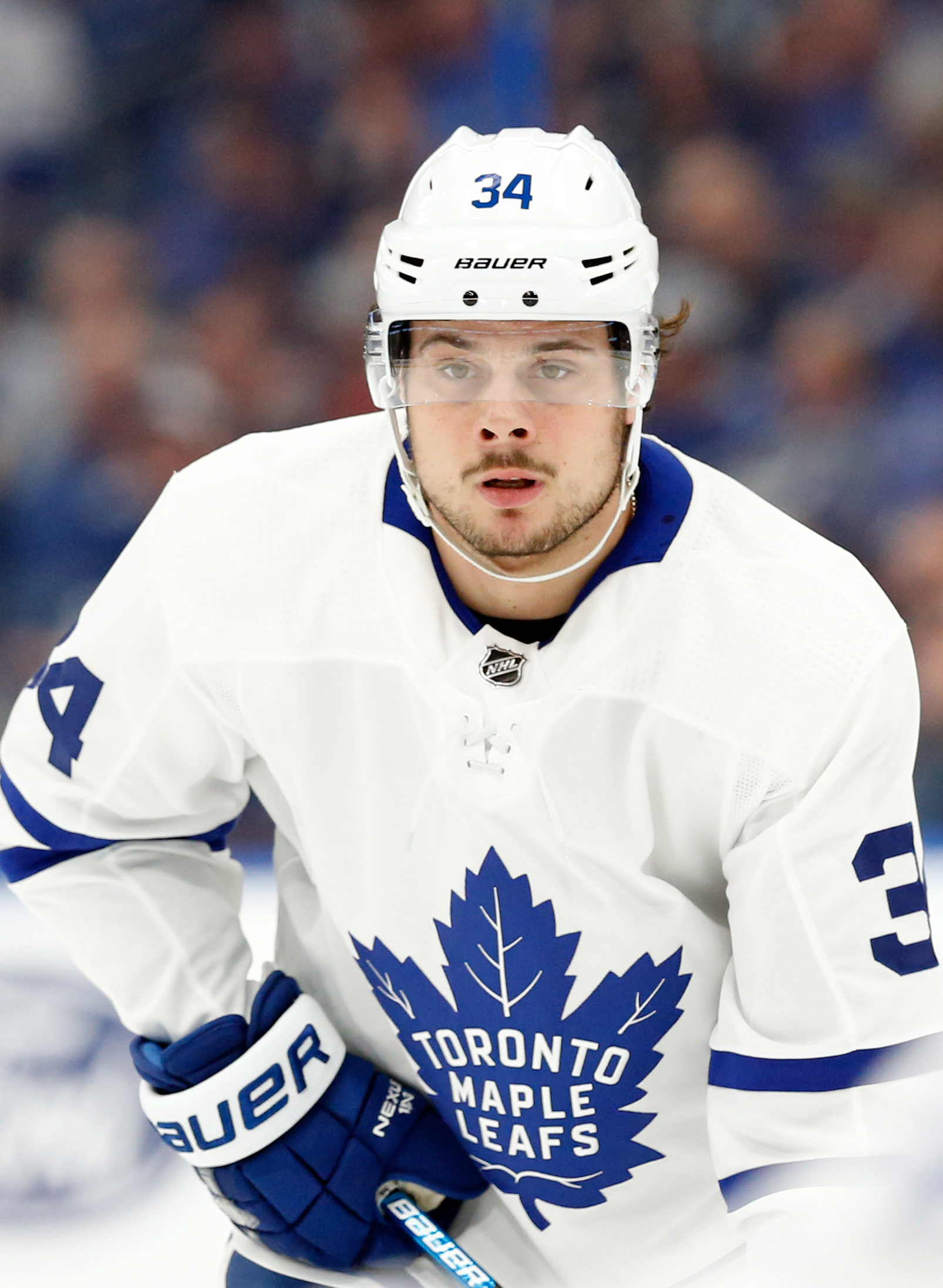 Auston Matthews: $15.2MM
Mitch Marner: $14.3MM
John Tavares: $11.09MM
Jake Muzzin: $7.3MM
Frederik Andersen: $4MM
William Nylander: $3.5MM
Alexander Kerfoot: $1MM
Kasperi Kapanen: $1MM
Andreas Johnsson: $1MM
Justin Holl: $1MM
Total: $59.39MM
There are two things to note here. First, this amount is actually lower than it was a year ago when it actually eclipsed $70MM. Second, this doesn’t include players on entry-level contracts who receive a signing bonus of up to $92.5K such as defenseman Rasmus Sandin. That’s a lot of money in play for just one team.
While we have seen some announcements recently about the NHL’s Return to Play plan, there is still many things that need to be negotiated between the two sides and this is one of them. It’s understandable if their focus is on finalizing health and safety protocols as they proceed towards the final two phases of their plan but with this much money at stake, the fate of the July 1st signing bonuses is going to have to be decided on sooner than later.
Photo courtesy of USA Today Sports Images.
Latest On Return To Play And CBA Talks
Negotiating through all of the safety and logistical challenges as the NHL and NHLPA attempt to finalize the framework for the NHL’s final two phases of their Return to Play plan is difficult enough. Adding in a CBA extension only makes it that much tougher but as Pierre LeBrun reports in his latest column for The Athletic (subscription required), that is indeed what the two sides are working on.
In fact, LeBrun notes that the two elements (final plans for the NHL’s return plus a CBA Memo of Understanding) could very well be presented as a package deal to the players before the end of the month.
The main reason for this would appear to be the salary cap. With the expected drop in revenue for the remainder of this season plus next year as attendance will likely take a dip, escrow is expected to rise considerably. The two sides are believed to be negotiating a fixed percentage with the hopes that as fans are able to return and a new television agreement in the United States is worked out, any lingering ‘debt’ to get the revenue split back to 50/50 will be paid off over time. Salary deferrals are also on the table.
In terms of shorter-term issues, LeBrun adds that the sides are working on an opt-out provision that would allow players who are uncomfortable with returning to sit out the postseason. It would almost certainly come with some sort of financial hit – perhaps forfeiture of their final regular season pay which has still not been resolved and/or not getting a playoff pool share – but the option to sit out would be there.
If a CBA vote is indeed required, it would require all NHLPA members to vote on it. Conversely, in the previous votes on Return to Play protocols, only team representatives were included. Needing the rubber staff from the full membership will take several days at a minimum to complete and with this being tied in with plans on the next phase (slated to start July 10th), time is starting to become of the essence, especially with a new Critical Dates calendar needed by the end of the month. To that end, talks are expected to continue daily until an agreement is reached.
In the meantime, an announcement is expected on the two hub cities by next week with a previous report saying that it could come as soon as Monday. Once that occurs, some more details for the third phase can start to be finalized. Despite an uptick in recent positive COVID-19 tests, Vegas is still believed to be a front-runner while the Canadian Press reported late Thursday that a path has been cleared for a Canadian host city to bypass the current 14-day quarantine requirement which increases the odds that Toronto, Edmonton, or Vancouver will have an opportunity to be a hub. As TSN’s Bob McKenzie noted in the latest Insider Trading segment, the NHL’s preference is to have hub city host teams play in the other hub to avoid any possible home ice advantage, that’s only possible if each conference has one hub.
There has been a lot of progress made in recent weeks as the two sides work their way towards a resumption of play but there is also a lot that still needs to be accomplished over the next few weeks for that to happen.