
Cale Makar To Miss Game 2 Of Western Conference Final
5/22/26: Bednar told the media today that Makar will miss game two against the Golden Knights tonight. While Makar’s absence has been designated day-to-day, it’s unclear at what point he’ll ultimately be able to return to the Avalanche lineup. The team struggled without Makar in game one, dropping the contest to Vegas by a 4-2 score.
Bednar said after the game that “some of the areas that [the team] struggled with” are the things Makar is best at. The Avalanche stuck with Ahcan for game one, leaving Blankenburg as a healthy scratch once again. Because of the loss, it will be interesting to see whether Bednar makes a change on his blueline. The Avalanche entered the series as favorites to win the Stanley Cup, but Makar’s injury threatens that status.
5/20/26: The Colorado Avalanche will be without star defenseman Cale Makar for the first game of their Western Conference Final series against the Vegas Golden Knights, head coach Jared Bednar announced today. Bednar classified Makar’s undisclosed injury as day-to-day and said that he does expect Makar to return relatively quickly – but not in time for game one.
Makar’s health is one of the key storylines to track for the upcoming series given Makar’s importance to the Avalanche as well as his status as arguably the game’s top defenseman.
The status of Makar has been the subject of speculation since game one against the Wild, when he left the ice after taking a big hit from Wild forward Marcus Foligno. He was limited to just 17:11 time on ice per game in the team’s 9-6 win. It’s not known whether the injury Makar is currently dealing with is in any way related to what happened in game one of the previous round.
The loss of Makar – even for just a single game – is very significant for the Avalanche. As mentioned, he is arguably the top blueliner in the world. The 27-year-old is a two-time Norris Trophy winner, and has routinely elevated his game in the playoffs. His heroics in the 2022 postseason, when he scored 29 points in 20 games, resulted in a Stanley Cup championship for his team and a Conn Smythe Trophy win recognizing his individual efforts.
Colorado now sits as the favorites to win another Stanley Cup, but Makar hasn’t been leading the charge in quite the same way. The Avalanche’s power play has struggled all year, and that can partially explain why Makar’s production is down somewhat from prior campaigns. After two consecutive years reaching the 90-point plateau, Makar scored 79 points in 75 games this past season. That’s still exceptional production, of course, but a little shy of the normal standard he’s set. So far in these playoffs, Makar has five points in nine games.
His slight decline in numbers should not diminish the significance of his injury. The Avalanche have lost one of their very best players for the start of this series, and even though they are favored against the Golden Knights, they would surely prefer to navigate game one with one of their best players roaming the blueline.
Bob Hartley Announces Retirement
Bob Hartley, a longtime head coach in the NHL who won a Stanley Cup championship and a Jack Adams Award, announced his retirement from coaching today. Hartley coached Lokomotiv Yaroslavl of the KHL to a Gagarin Cup title earlier this week.
The announcement concludes a coaching career that began all the way back in the late 1980s. Hartley got his start in junior hockey, coaching the CJHL’s Hawkesbury Hawks. He coached the team to back-to-back titles in 1990 and 1991, achievements that landed him a role coaching in the QMJHL for the Laval Titan. In two seasons in Laval, Hartley went 81-52-7, winning a league championship in his second season in his role.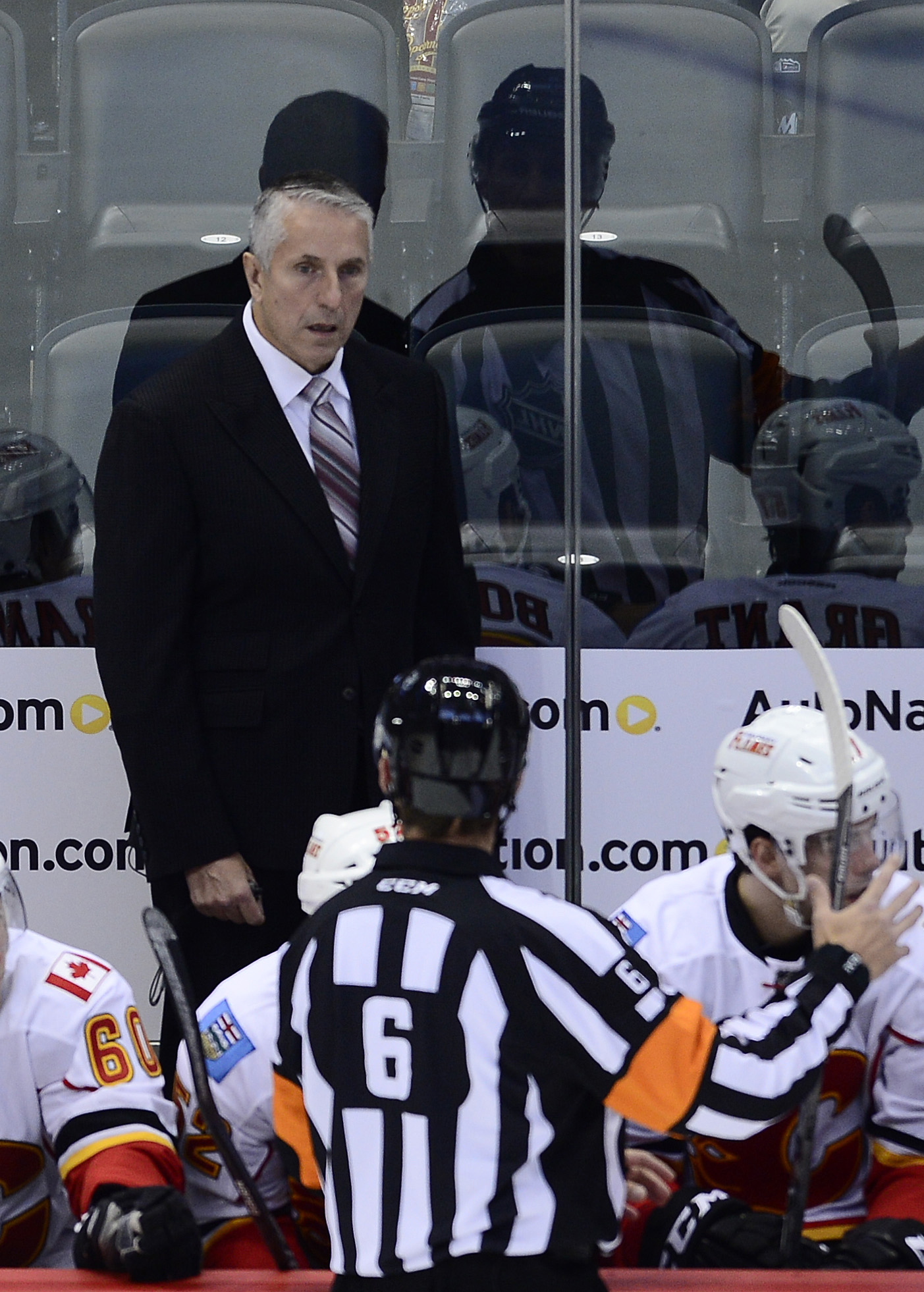
After winning a title with Laval, Hartley continued to climb the coaching ladder, taking an assistant coaching job in the AHL with the Cornwall Aces, on the staff of future Jack Adams winner Jacques Martin. Martin left for an NHL role with the Quebec Nordiques after just a year, leaving Hartley as head coach of the Aces.
He won division titles in each of his two years as head coach in Cornwall. The Aces were at the time the affiliate of the Nordiques, who in 1995 relocated to Colorado. The Avalanche let Cornwall go dormant, and switched their hockey operations personnel, including players and coaches, to the Hershey Bears. Hartley won a Calder Cup title in his first season as head coach of the Bears, in 1996-97.
Hartley’s Calder Cup win put him on the path to becoming a future NHL head coach, and he didn’t have to wait too long to get his chance. In 1998, Avalanche head coach Marc Crawford resigned after his team fell in the first round of the playoffs, just two seasons removed from leading the Avalanche to a Stanley Cup. The Avalanche elevated Hartley to the position of head coach, and was an instant success. In his first two campaigns on the job, Hartley defeated Scotty Bowman’s Detroit Red Wings in back-to-back playoffs, but fell to the Dallas Stars in the Western Conference Final in both years.
In his third season, Hartley’s Avalanche won 52 games and won the Stanley Cup, delivering a long-awaited championship to legendary defenseman Ray Bourque. The following year, in 2002, Hartley’s Avalanche fell to the Red Wings in the Western Conference Final. Hartley was fired after 31 games in 2002-03, but didn’t wait long for another job. He was hired by the Atlanta Thrashers that same season. While he had inherited a team capable of contending for Stanley Cups in Colorado, Hartley was dealt the opposite hand in Atlanta, joining a franchise that averaged under 20 wins in its first three seasons.
Hartley was able to make his mark in Atlanta. He guided the franchise through serious off-ice adversity, and under his leadership, the Thrashers entered their strongest period in franchise history. Hartley’s 2006-07 team was the only Thrashers team to reach the playoffs, winning a Southeast Division title with a 43-28-11 record. The following year, he was fired by Atlanta after an 0-6-0 start to their 2007-08 season.
Hartley spent 2011-12 in Switzerland coaching the ZSC Lions, and he had a successful tenure there, winning a National League title. That helped pave the way for what would be Hartley’s final head coaching role in the NHL – a job with the Calgary Flames. Hartley missed the playoffs in three of his four seasons in Calgary, but his 2014-15 campaign stands out as he went 45-30-7 and won the Jack Adams Award as coach of the year. A year later, he was let go by the Flames. From 2016-17 through 2020-21, Hartley was head coach of Latvia’s national team.
In 2018-19, Hartley became a head coach in the KHL for the first time, and in his time coaching both Avangard Omsk and Lokomotiv, he has been to three Gagarin Cup finals and won the trophy twice. We at PHR would like to extend our best wishes to Hartley in his retirement and congratulate him on an exceptional coaching career.
Photos courtesy of Ron Chenoy-USA TODAY Sports
Snapshots: Duggan, Walsh, DiDomenico
New Jersey Devils director of player development Meghan Duggan has been hired as general manager of PWHL Hamilton, one of the new expansion teams joining the highest level of professional women’s hockey. The hire means Duggan will leave the Devils organization after a half-decade in her player development role. Hailey Salvian of The Athletic notes that Duggan has had some association with the PWHL during her time in New Jersey, serving as special consultant to the hockey operations staff and as a member of the league’s player safety committee.
As a player, Duggan was a highly-decorated captain of the U.S. National Team. Her career in hockey operations began on the coaching staff of Clarkson University’s women’s hockey program in 2014-15, and she coached there for two seasons while also playing in the now-defunct CWHL and NWHL, precursor leagues to the PWHL. In 2021, she was hired by the Devils as director of player development. It seems likely that the Devils, led by a new GM in Sunny Mehta, will look to fill Duggan’s former role at some point this summer.
Other notes from around the hockey world:
- Former Devils minor-league defenseman Reilly Walsh has signed a one-year contract extension with KHL club Barys Astana. The 27-year-old blueliner was a third-round pick of the Devils at the 2017 draft. A near point-per-game defenseman while he played college hockey at Harvard, Walsh developed into a quality offensive top-four defenseman at the AHL level. He crossed the 40-point plateau twice and had a total of 159 points in 304 career AHL games. Walsh scored 32 points in 70 games for the Ontario Reign in 2024-25, but with over 260 games at the professional level, he was no longer considered a “development player” by the AHL’s development rule, a factor that has prompted many quality AHL players to take contracts overseas. He signed with Astana and played very well there in 2025-26, scoring 16 goals and 46 points, tied for the team lead in scoring with Mike Vecchione, a fellow AHL veteran who left the North American pro ranks last summer.
- Chris DiDomenico, a former Ottawa Senators forward, has decided to leave the Swiss National League after eight seasons as a top player there. DiDomenico has signed with the SHL’s IF Björklöven, per a team announcement. The 37-year-old forward played in 24 games for the Senators in 2017-18, having been signed by the team after two seasons as a quality top-six forward in the Swiss top division. Two members of the Senators’ coaching staff at the time, head coach Guy Boucher (SC Bern) and associate coach Marc Crawford (ZSC Lions), had coached against DiDomenico prior to arriving in Ottawa. DiDomenico was not the only forward the Senators signed out of Switzerland at that time, though he was not as successful in the NHL as fellow signing Tom Pyatt. DiDomenico returned to Switzerland in 2018 and has been a star forward there for the last eight years. Now, he’ll look to bring those qualities to Sweden.
Jack Nesbitt Commits To University Of Michigan
Philadelphia Flyers first-round pick Jack Nesbitt announced on social media today that he has committed to play NCAA hockey at the University of Michigan.
Nesbitt, 19, has played the last three seasons for the Windsor Spitfires of the OHL. Today’s announcement confirms his OHL career has now concluded. A 6’4″ center, Nesbitt has been a quality top-six center for the Spitfires in each of the last two seasons. In his draft campaign, he scored 25 goals and 64 points in 65 regular-season games, and 10 points in 12 playoff games.
This past year, Nesbitt kept up those levels of production – though he didn’t take a major step forward statistically. He finished 2025-26 with 25 goals and 58 points in 55 regular-season games, and 10 points in 13 playoff games. Nesbitt’s Spitfires made a run to the OHL’s conference finals, where they were dispatched in five games by the Kitchener Rangers, the eventual champions.
As a prospect, Nesbitt is generally well-regarded, though some have questioned his eventual NHL upside. Entering the season, the team at Elite Prospects ranked Nesbitt the No. 8 prospect in the Flyers’ system, and he did not feature in their ranking of the top-100 prospects league-wide. In ranking him No. 8 in Philadelphia’s system, Cam Robinson wrote Nesbitt “projects as a reliable two-way forward who can play tough minutes and chip in offensively.”
Scott Wheeler of The Athletic rated Nesbitt the No. 4 prospect in Philadelphia’s system last month, and the No. 80 prospect leaguewide. Wheeler noted scouts have “questions about [Nesbitt’s] ultimate offense and whether he projects as more of a third-line player than a top-six one.”
Nesbitt will get the chance to try to answer those questions at Michigan. He’ll join a team filled to the brim with quality NHL prospects, including first-round pick forwards Michael Hage and Will Horcoff, as well as potential 2026 first-rounders in Adam Valentini and J.P. Hurlbert. Given how much talent Michigan expects to have next season, it will be interesting to see whether Nesbitt lands in the top-six as a freshman with the Wolverines, or if he is utilized in more of a supporting role.
Snapshots: Foligno, Legault, KHL
Minnesota Wild winger Marcus Foligno told The Athletic’s Joe Smith that it would be a “no-brainer” for his brother Nick Foligno to accept a contract extension with the Wild, assuming he is offered one. Foligno said his brother “showed he’s a great role piece for this team” and “likes the makeup of the team” moving forward. With that said, the elder Foligno brother, Nick, said he needs to discuss all of the possibilities for his playing future with his family, and that he will need to be “100 percent committed” if he’s to continue his career with the Wild.
Foligno, 38, was a solid contributor in Minnesota after they acquired him in a mid-season trade with the Chicago Blackhawks. Though he didn’t produce much offense (just four points in 17 regular-season games) he did hold his own on the penalty kill and as a physical presence in the bottom-six. Smith also noted that Foligno, a former captain for two NHL teams, became a “respected voice in the room” for the Wild. If he’s to return in Minnesota, Foligno would likely need to take a steep pay cut from the $4.5MM he earned on his last deal. When Foligno signed that contract, he was in the midst of a season that he finished with 17 goals and 37 points in 74 games. It’s unlikely Foligno will reach that level of scoring again, but he still has something to offer NHL teams, and his brother hopes he’ll do so in Minnesota.
Other notes from around the hockey world:
- The AHL announced today that Chicago Wolves defenseman Charles-Alexis Legault has been suspended one playoff game “as a consequence of a boarding incident” in his team’s playoff game against the Grand Rapids Griffins on May 19. A video of the play in question can be found here. Legault appeared to drive Griffins forward Amadeus Lombardi into the boards, after Lombardi had already tripped and was sliding on the ice. Grand Rapids ended up winning the game in overtime thanks to a goal from first-round pick Michael Brandsegg-Nygard, but the Wolves retain a 2-1 series advantage. They can end Grand Rapids’ season tonight in game four, but will have to do so without Legault.
- Lokomotiv Yaroslavl of the KHL won their second consecutive Gagarin Cup title earlier today, defeating Ak Bars Kazan in six games. Lokomotiv’s roster is full of players who are either NHL prospects or who were formerly members of NHL organizations. Their leading scorer, Alexander Radulov, was a lethal scoring winger for the Dallas Stars from 2017 to 2022. Winger Richard Pánik is a former NHL 20-goal scorer. The team also has a few NHL prospects, including 2020 Edmonton Oilers draft pick Maxim Berezkin, and Nashville Predators 2024 first-rounder Yegor Surin. Per Alex Daugherty of The Tennessean, Predators Assistant GM and Director of Scouting Jeff Kealty said Surin “would be an NHL player” right now if not for his contract with Lokomotiv, which runs through 2026-27.
West Notes: Kuzmenko, Stone, Makar
The Los Angeles Kings’ mid-season trade addition of star winger Artemi Panarin could spell the end of pending UFA Andrei Kuzmenko‘s time in the organization, writes Eric Stephens of The Athletic. Per Stephens, Kuzmenko is “likely not needed” now that the Kings have committed to Panarin. Panarin, 34, scored 27 points in 26 regular-season games after his trade to Los Angeles, and signed a two-year, $11MM AAV contract extension to remain a King through 2027-28.
Kuzmenko, 30, is a pending free agent, and the fact that Panarin has signed an extension could mean Kuzmenko will have to look elsewhere to continue his NHL career. Kuzmenko underwent surgery to repair a torn meniscus in February but returned in time for the playoffs. He had a stellar run after being acquired by the Kings in a mid-season trade in 2024-25, scoring 17 points in 22 regular-season games and six points in six playoff contests. But he wasn’t able to keep up that momentum in 2025-26, as he managed just 25 points in 52 games. Now, he’s reportedly more likely than not to need to continue his NHL career with another franchise.
Other notes from the Western Conference:
- Vegas Golden Knights forward Mark Stone did not skate in today’s optional practice at Ball Arena in Colorado, reports SinBin Vegas. Stone had skated prior to Vegas’ game one victory over the Avalanche, which was his first time skating with the team since he suffered a lower-body injury in the second round against the Anaheim Ducks. Head coach John Tortorella did not provide an update on Stone’s status, and it is unclear what his timeline to return to the Golden Knights’ lineup is. The 34-year-old is one of Vegas’ best all-around players, and had 28 goals and 73 points in 60 games during the regular season.
- Head coach Jared Bednar did not provide an update on the status of injured star defenseman Cale Makar today, indicating that his status remains questionable for game two of the Western Conference Final. Makar missed game one and his replacement in the lineup, Jack Ahcan, played just 7:34 time on ice. Colorado’s next option to replace Makar in the lineup beyond Ahcan is Nick Blankenburg, who the team acquired from the Nashville Predators shortly before the trade deadline. Blankenburg is a right-shot defenseman who scored 24 points in 61 games this season.
East Notes: Crosby, Leach, Sabres
Although Pittsburgh Penguins captain Sidney Crosby will turn 39 before the start of next season, he isn’t seriously considering ending what has been a legendary career in the NHL. Crosby spoke to The Athletic’s Josh Yohe about his future, and said “I definitely want to keep playing for as many years as possible.” He also added that any previous comments about wanting to take a “year-to-year” approach was more about giving the Penguins as much financial flexibility as possible, rather than an indication that he is weighing hanging up his skates.
That Crosby isn’t giving any serious thought to retirement shouldn’t come as any surprise. First and foremost, Crosby is one of the game’s all-time great competitors. He hasn’t won a playoff series since 2017-18, and it’s likely he’ll want to see the Penguins through their current retool as far as he can. But the more important factor to Crosby’s longevity isn’t his competitive drive, it’s the simple fact that he remains an extremely effective NHL center. Crosby scored 29 goals and 74 points in 68 games in 2025-26. Although the Penguins stumbled in the first round of the playoffs, Crosby is still a star first-line center. Before injuries limited him this past season, Crosby had three consecutive campaigns where he scored more than 90 points. It seems he’s eager to continue leading the Penguins into their increasingly promising future, and for as long as he wants to continue playing, he’ll have a place at the top of the Penguins lineup.
Other notes from around the NHL:
- The Boston Bruins will not retain assistant coach Jay Leach for next season, reports David Pagnotta of The Fourth Period. Leach, whose contract is set to expire this summer, has been an assistant behind the bench in Boston for the last two years. First-year head coach Marco Sturm inherited Leach from the staff of former bench boss Jim Montgomery. Per Conor Ryan of the Boston Globe, Leach “primarily worked with Boston’s defensemen” during his time with the team. Before he became an assistant in Boston, Leach spent three seasons with the Seattle Kraken on the staff of former head coach Dave Hakstol. Leach had some previous experience in the Bruins organization as well, serving as head coach of their AHL affiliate, the Providence Bruins, for four seasons.
- Buffalo Sabres general manager Jarmo Kekäläinen told the media, including Matthew Fairburn of The Athletic, that he informed skaters Bowen Byram and Zach Benson of the organization’s desire to sign them both to long-term contract extensions. Benson, 21, enjoyed a breakout third season in the NHL, scoring 18 goals and 52 points across 78 combined regular-season and playoff contests. The twin pillars of Benson’s game – his dynamic offensive skill and his aggressive, pest-like qualities – have endeared him to Sabres fans and team management alike. Kekäläinen called Benson, who is a pending RFA, a “core piece.” Byram, who turns 25 early next month, isn’t a pending RFA but becomes extension-eligible July 1. His $6.25MM AAV contract walks him directly to unrestricted free agency in a little over a year, but Buffalo is hoping he won’t reach that point. Byram scored 11 goals and 43 points this past season, and added seven points in 13 playoff games.
Transaction Notes: Paquette, Gaudreau, Mayer
The Texas Stars, AHL affiliates of the Dallas Stars, announced the signing of forward Charlie Paquette to a one-year AHL contract. As is customary with AHL deals, the financial terms of the contract were not disclosed. Paquette, 20, was a seventh-round pick by the team at last year’s entry draft. The Stars hold the exclusive rights to sign Paquette to an entry-level contract until June 1, 2027, but they have decided to give Paquette a place in their organization – albeit without an ELC – before that point.
The contract will allow Paquette to turn pro with AHL Texas next season. Paquette is a 6’2″ winger who has played in the OHL since 2021-22. Paquette experienced steady, positive development over the course of his time in junior hockey. He scored just seven points in 54 games as a rookie, but two years later managed 21 goals and 35 points. He became a point-per-game scorer in his final two years of OHL action, potting 66 goals and 133 points in his final 133 games of junior hockey. While he is not considered to be among Dallas’ top prospects, he’ll get the chance to try to make the Stars’ AHL team next fall, and will either begin his career there or with the franchise’s ECHL affiliate, the Idaho Steelheads.
Other transactions from around the hockey world:
- Minor-league goaltender Benjamin Gaudreau, 23, announced on social media earlier this week that he has committed to play college hockey next season at Clarkson University. While Gaudreau would have been ineligible to play college hockey in previous years due to his experience in professional hockey, more recent developments in the area of collegiate eligibility have paved the way for players with ECHL and even AHL games played to head to, or back to, the college ranks. Gaudreau is a 2021 third-round pick of the San Jose Sharks but the team let his rights lapse without giving him an entry-level deal. Gaudreau is perhaps best known for the place he occupied on Team Canada for the World Junior Championships in 2022-23. He had a shutout over Austria in the tournament and helped Canada win gold. Gaudreau spent last season with the Trois-Rivières Lions of the ECHL, posting an .897 save percentage in 29 games. In total, he has played in 72 games in the ECHL and five games in the AHL.
- Defenseman Connor Mayer has decided to head overseas to continue his professional career after spending the last two seasons in the AHL and ECHL. The former Colorado College blueliner signed a deal with HC Innsbruck of the ICEHL. Mayer will head to Austria after a 2024-25 season that saw him lose his spot in the AHL. Mayer signed out of college late in the 2023-24 season and spent most of 2024-25 in the AHL, getting into 22 games for the AHL’s Colorado Eagles compared to just four games in the ECHL with the Utah Grizzlies. Mayer then signed with the Hershey Bears but he only ended up playing in one game for the club. He spent most of 2025-26, 55 total games, with the ECHL’s South Carolina Stingrays. Now the 5’11” rearguard will head to Austria to join an Innsbruck franchise that has struggled mightily over the last two years – winning just 20 of their last 96 league contests.
Free Agency Notes: Jenner, Laughton, Chrona
The Columbus Blue Jackets may need a new captain for next season, as Aaron Portzline of The Athletic reported yesterday that Boone Jenner may be getting “squeezed out of the mix in Columbus” in advance of the expiry of his contract on July 1. Jenner, who was reported to have recently swapped longtime agent Joe Resnick for Pat Morris of Newport Sports Management, has only played for the Blue Jackets in his 808-game NHL career. He’s the franchise’s all-time games played leader. Elliotte Friedman of Sportsnet said on today’s 32 Thoughts podcast that Columbus is hoping to find a way to keep Jenner, but Jenner “feels whatever he’s being offered is not anything he’s willing to accept.”
It’s not immediately clear what the Blue Jackets’ offer to Jenner might look like. Head coach Rick Bowness spent much of his time in Columbus utilizing Jenner in the bottom-six. He averaged 16:04 time on ice per game this season, down from 18:00 per game last year. Jenner also lost his grip on a spot on the Columbus power play, after averaging 1:48 time on ice per game there last season. Another factor that could contribute to Jenner’s exit from Columbus is his health. He’s missed significant time due to injuries over the past three years and despite solid production (13 goals, 38 points) in 2025-26, Columbus simply may not be able to offer Jenner the kind of contract he’s looking for given his availability and the amount of money they just committed to another veteran pivot, Charlie Coyle.
Other notes about pending free agents:
- The Los Angeles Kings are holding talks this week with pending UFA center Scott Laughton on a potential contract extension, reports Dennis Bernstein of The Fourth Period. Laughton, who is also repped by Morris, will see the five-year, $3MM AAV contract he signed in 2021 expire on July 1. The 31-year-old was acquired by the Kings as a deadline deal that returned a third-round pick to his former team, the Toronto Maple Leafs. Just one year before that, Laughton’s league-wide stock was high enough for him to return a first-round pick and prospect Nikita Grebenkin on the trade market. Bernstein noted that Laughton was “solid in [head coach] D.J. Smith’s system” after arriving in Los Angeles, so the decision on who the Kings might hire as their permanent bench boss could impact how far the team is willing to go to extend the center. Laughton scored eight points in 21 games with the Kings but has a career-high of 18 goals and 43 points from 2022-23. AFP Analytics projects him to receive a three-year, $4.1MM AAV deal on the open market.
- The SHL’s Brynäs IF have officially announced the signing of goaltender Magnus Chrona to a two-year contract. We first covered reports indicating Chrona would be headed overseas for 2026-27 in January, and today’s announcement has made it official. Chrona, 25, has been a member of the Nashville Predators organization for the last two seasons, originally arriving to the team as part of the Yaroslav Askarov trade in August 2024. In each of his two seasons with the Predators, Chrona served as the No. 2 goalie for the team’s AHL affiliate, the Milwaukee Admirals. He posted a .903 save percentage in 2024-25, his debut campaign in Wisconsin, and had an .894 save percentage in 25 games this past year. Although this deal will allow Chrona to return to his home country of Sweden, he has not played there since 2018-19, during his junior hockey days. Chrona backstopped the Denver Pioneers to an NCAA National Championship before beginning his pro career with the San Jose Sharks.
Latest On Mark Stone
Injured Vegas Golden Knights star Mark Stone skated with the team’s scratches this morning. Per Jesse Granger of The Athletic, this is the first time Stone has skated with the team since suffering his lower-body injury. After the skate, head coach John Tortorella was asked about Stone’s status but did not provide any update.
The injury in question was suffered in game three of the team’s second-round series against the Anaheim Ducks. The Golden Knights were still able to fend off the Ducks and win the series despite losing Stone, but the Avalanche present an even greater degree of challenge.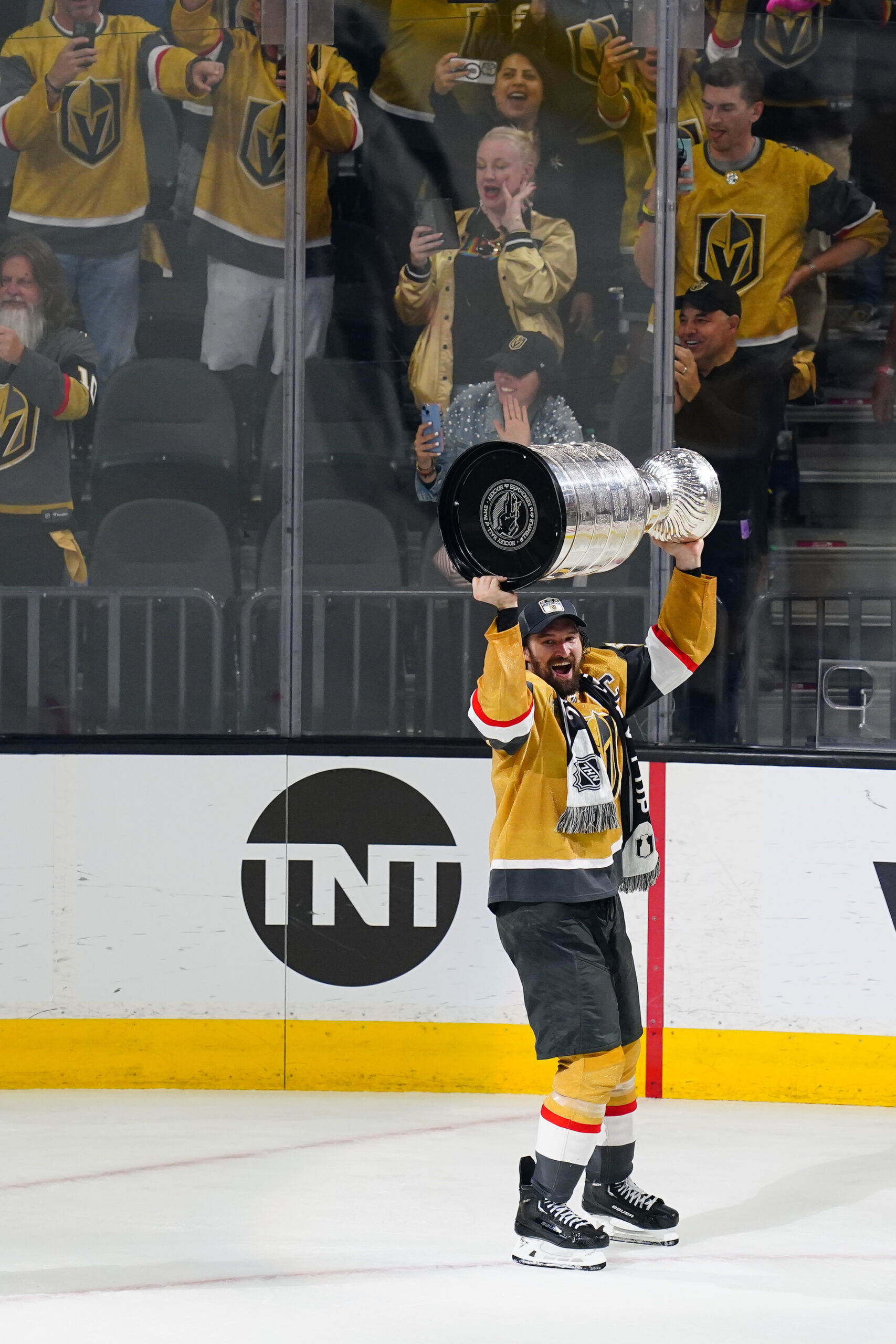
For Vegas to stand the best chance of getting past the Presidents’ Trophy winners to reach their third Stanley Cup Final in franchise history, they’ll likely need Stone back in the lineup.
The 34-year-old winger is among the game’s best all-around forwards when healthy. He has consistently produced around a point-per-game rate since arriving in Vegas, while also playing stellar two-way hockey.
While he has struggled to stay healthy during the regular season – he has hit 80 games played in a season just once in his career – his efforts in the playoffs have helped the Golden Knights make deep playoff run after deep playoff run.
This past season, injuries limited Stone to just 60 games played. But in those 60 contests, Stone reached new heights in terms of impact. He scored 28 goals and 73 points, which is a 38-goal, 100-point 82-game scoring pace.
Stone was also a regular member of the team’s penalty-kill rotation up front. Stone has been a finalist for the Frank J. Selke Trophy twice, and has appeared on Selke ballots nine times throughout his career. His two-way impact is unquestioned – but his availability has been a persistent source of worry.
Vegas will have their hands full stopping the Avalanche’s high-flying attack, especially if star defenseman Cale Makar, who will miss game one with an injury, can return in short order. A healthy Mark Stone would be one of the Golden Knights’ most valuable assets in their fight to slow down the Avalanche, so today’s news is certainly a step in the right direction for the team.
Photos courtesy of Lucas Peltier-USA TODAY Sports