
Central Notes: Blackhawks Defense, Sturm, No. 4 Pick
The Chicago Blackhawks’ priority in the offseason will be “adding a quality defenseman,” writes Scott Powers of The Athletic. There has been some belief that Chicago might be aggressive in pursuing a young top-six winger who can partner with franchise center Connor Bedard, and that still may be on the table, but Powers writes that the Blackhawks are likely to seek defensive help to stabilize a blueline that featured several young defensemen last season.
According to Powers, the Blackhawks are hoping their young defensemen, such as Artyom Levshunov and Sam Rinzel, are able to take steps forward, but also acknowledge that they “need some support.” Don’t look for the Blackhawks to prioritize right-shot defensemen, though. Powers would “be surprised if” Chicago was looking for a right-shot blueliner to compete with Rinzel and Levshunov, who will be all but assured spots in the opening-night lineup barring some sort of steep unexpected decline in form.
Other notes from the Central Division:
- The Minnesota Wild may be forced to choose between veteran fourth-line centers Nico Sturm and Michael McCarron over the next month, write Joe Smith and Michael Russo of The Athletic. The Wild traded a second-round pick to acquire McCarron, a pending UFA, from the Nashville Predators. McCarron indicated in his end-of-season media availability that he will be seeking to maximize his financial security with his next contract. If the Wild decide to pay the market price for McCarron, they could be forced to move Sturm. The 31-year-old has one more year left on his deal at a $2MM cap hit.
- The Blackhawks “are preparing for the possibility” that the upcoming draft’s top three forward prospects (Gavin McKenna, Ivar Stenberg, Caleb Malhotra) aren’t available at No. 4, writes Powers. Such an outcome would put the Blackhawks in a position where the next few top-ranked players are all likely to be defensemen. Chicago has already invested a recent top pick in a right-shot defenseman (Levshunov, the 2024 No. 2 pick) so according to Powers, they could be hesitant to pick someone such as OHL defenseman Chase Reid. The top left-shot options expected to be on the board are WHL blueliner Carson Carels and Latvian international Alberts Smits.
Avalanche Notes: MacKinnon, Blackwood, Wedgewood
Colorado Avalanche star forward Nathan MacKinnon will dress tonight for game four of the Western Conference Final against the Vegas Golden Knights. MacKinnon suffered a lower-body injury in game three, but that won’t stop him from taking the ice as Colorado looks to stave off elimination and avoid being swept by the Golden Knights. The news means Colorado will have both MacKinnon and star defenseman Cale Makar in their lineup tonight. Makar had missed game one and game two with an upper-body injury.
The importance of MacKinnon’s health to the Avalanche cannot be overstated. The 30-year-old is Colorado’s best player, and is one of the most impactful scorers in the game. MacKinnon won the Rocket Richard Trophy this past season with 53 goals. His total of 127 points in 80 games marked the second-highest point total of MacKinnon’s career. While his production has been down a tick in the playoffs, he is still tied for the third-most points in this year’s playoff scoring with 15 in 12 games. He’ll hope to add to that number tonight and extend the Avalanche’s season.
Other notes from Colorado:
- The Avalanche are making a change in net, and will start MacKenzie Blackwood in goal rather than Scott Wedgewood, according to reports from the team’s optional morning skate. Blackwood hasn’t played against the Golden Knights, but did see some time in net in the second round. Blackwood got his first start of the playoffs in game four of the second round against the Minnesota Wild. He stopped 19 of 21 shots in the Avalanche’s 5-2 win, but lost his job as starter in the following game after surrendering three goals on 13 shots in an eventual Avalanche comeback victory. The 29-year-old, who is signed at a $5.25MM AAV through 2029-30, went 23-10-2 in the regular season with a .904 save percentage.
- The move to start Blackwood means Wedgewood, 33, may have already played in his final game of his 2025-26 season. Wedgewood’s 2025-26 campaign stands as, without question, the strongest of his career. The longtime backup seized the No. 1 role in Colorado, playing in a career-high 45 games. Wedgewood improved on his stellar form from last season, posting a 31-6-6 record and a .921 save percentage. While he was not named as a finalist for the Vezina Trophy, he and Blackwood took home the William M. Jennings Trophy. Wedgewood is under contract for one more year at a $2.5MM cap hit.
Penguins Sign Evgeni Malkin To One-Year Extension
The Pittsburgh Penguins have signed future Hall of Fame center Evgeni Malkin to a one-year contract extension, per a team announcement. The deal contains an AAV of $5.5MM.
According to Chris Johnston of The Athletic, Malkin can exceed his $5.5MM guarantee by earning up to $500K in games played bonuses, $1MM if the Penguins reach the playoffs, and $500K for each playoff round the team wins. The contract also contains a full no-move clause. PuckPedia has reported the deal contains a $3MM signing bonus.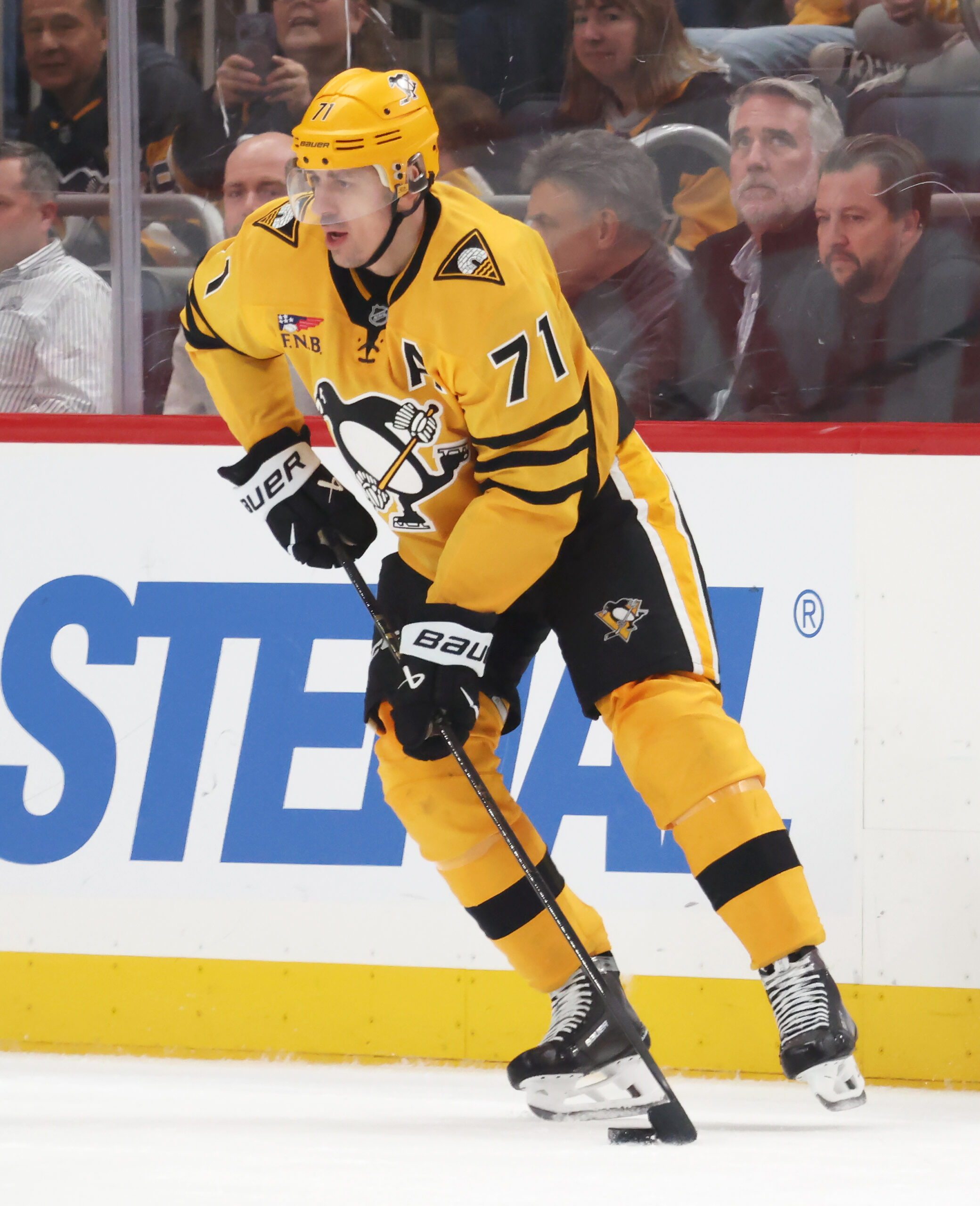
Malkin’s extension puts an end to what was months of speculation about his Penguins future.
Just this morning, we covered reports indicating that Malkin’s sights were set on an extension with Pittsburgh, and that he was unlikely to be headed elsewhere. This represented a distinct shift from what had been reported over the last year.
A year ago, Josh Yohe of The Athletic reported that the 2025-26 season would be Malkin’s “last in Pittsburgh.” He cited sources within the organization who indicated that the Penguins were “not expected to offer him another contract with the franchise.”
It seems Malkin’s performance this past year, as well as the Penguins’ surprisingly strong regular season, changed the organization’s thinking.
Malkin, who turns 40 at the end of July, seemed to turn back the clock in 2025-26. He scored 19 goals and 61 points in 56 games, his first season pacing at above a point-per-game rate since 2022-23. The Penguins endured a difficult series against their arch-rival Philadelphia Flyers, losing in six games in the first round, but that doesn’t erase what he was able to accomplish in the regular season.
The key question for Malkin is health. While he was perfectly healthy in 2022-23 and 2023-24, he has missed some time in each of the last two years. In 2024-25, he played in 68 games, and this past year was limited by upper-body injuries as well as a lengthy five-game suspension. Malkin’s on-ice qualities remain exceptional, but there has been concern about his ability to stay on the ice, as well as how his on-ice value will fare if the pace of his game slows further.
Pittsburgh appears determined to turn over their team to a new generation of young forwards, including promising rookie center Ben Kindel. Much of the prior reporting indicating Pittsburgh was hesitant to extend Malkin can likely be explained by the organization’s desire to carve out as much ice time and prime power play opportunities for its young forwards.
But Malkin showed he still has quite a lot to offer in the NHL, and the Penguins don’t have to pick between keeping Malkin and developing their young players – they can do both. Kindel, for example, could stand to benefit from another season sharing the ice and locker room with Malkin.
Now, he’ll get the chance to do so as the Penguins have elected to keep one of their two legendary centers for an additional season.
Photos courtesy of Charles LeClaire-Imagn Images
Claude Giroux To Continue Playing For 2026-27 Season
Veteran scorer Claude Giroux will not hang up his skates for at least one more season, reports Pierre LeBrun of The Athletic. According to LeBrun, Giroux “needed some time after the season to mull over his future” as he was considering retirement, but now the 38-year-old “has decided he wants to come back and play another season.”
Giroux’s decision means a 1,345-game NHL career that began in 2007-08 will continue for at least one more campaign. Complicating Giroux’s situation is the fact that he is a pending unrestricted free agent. Giroux has been playing for his hometown Ottawa Senators since 2022, arriving there from the Florida Panthers. Giroux was on the Panthers as a rental trade addition. Before that, he was a top scorer and face-of-the-franchise player for the Philadelphia Flyers.
One of the greatest Flyers in the franchise’s modern history, Giroux is no longer the star scorer he once was. At 38 years old, that’s to be expected. But he has shown himself to still be a productive scoring winger for the Senators even as he’s aged. In 2025-26, he scored 14 goals and 49 points. That’s not quite at the level of his debut season in the Canadian capital (35 goals, 79 points in 2022-23) but still more than strong enough to make him worth his cap hit of $2MM. (Base cap hit, he also earned $1MM in performance bonuses)
Looking ahead to next season, it seems overwhelmingly likely that Giroux will remain in Ottawa. Another one-year contract with a relatively low base salary and stocked full of performance bonuses, similar to the contract he played last season on, seems most appropriate.
Playing at least one more year, Giroux will be able to help the Senators try to win their first playoff series since their run to the Eastern Conference Final in 2017. He’ll also be chasing some individual milestones, like 1,400 games played, 400 goals, and 1,200 points.
Leo Lööf Signing With Liiga Club Ilves
A St. Louis Blues prospect is taking his talents back to Scandinavia.
As first reported by Mike Meyer of STL Sports Central, defenseman Leo Loof is signing a two-year contract with Ilves in Finland for the 2026-27 season. According to the club’s press release, the 24-year-old defenseman will return to his former club, where he previously spent two seasons before his journey to North America.
Loof finished his 2025-26 season in the AHL, scoring six points in 47 regular-season games played with Springfield. He did not dress during their Calder Cup playoff run, which ended via an 8-1 Game 5 loss to the Wilkes-Barre/Scranton Penguins. The former third-round pick in 2020 spent three seasons under the St. Louis Blues organization on a three-year entry-level contract signed back in 2023 that paid him $2.6MM ($867,500 AAV). The 6-foot-1, 201-pound Swede did not see an NHL debut, playing all three of those ELC seasons with the Thunderbirds for a total of 168 AHL games.
Leading into the 2020 NHL Draft, Loof was profiled as a tough player in his own end, who was efficient in his poise and ability to make strong reads on a play and deliver heavy hits. His accolades before coming across the pond included Bronze Medals with Ilves and the Swedish World Juniors team. He also won a Hlinka Gretzky Cup Bronze in 2020 and was considered the J18 Best U18 Defenseman while scoring the most points (12) by a defenseman in the J18 Allsvenskan in 2018-19.
The former 88th overall pick was in a logjam in comparison to other left-handed defensemen in the Blues system. St. Louis already extended Philip Broberg through 2032 at $48MM ($8MM AAV), Cam Fowler through 2030 at $18.3MM ($6.1MM AAV), as well as Tyler Tucker, who has a year left at $925,000. Among his counterparts in the pool, ELCs were signed by Lukas Fischer, at age 19, in late March, and Colin Ralph put ink to paper out of Michigan State in early April. Already in the AHL, Theo Lindstein and Michael Buchinger both played more games than Loof this past season.
New general manager Alexander Steen will inherit three selections in the first round of the 2026 NHL Draft, where some prominent defensemen could potentially be available for the taking, who would rank high among their prospect pool if selected. St. Louis could use those picks to take a defenseman at either the guaranteed 11th or 15th overall picks (Colorado’s standing to be determined). As the Blues look to build back into playoff contention out of their fifth-place finish in the Central Division, they currently carry $15.7MM in cap space.
Morning Notes: Malkin, Kane, Pronger
Some familiar names from the 2000’s have circulated recently in the hockey world.
The biggest is one who, as expected, doesn’t appear to be going anywhere. Evgeni Malkin is not likely to sign anywhere but Pittsburgh, according to Pierre LeBrun of The Athletic. The long-time Russian star turns 40 a month after free agency opens on July 31, and his agent, J.P. Barry, has already been in discussions with the Pittsburgh Penguins about coming back on a one-year deal. The length appears to be consistent with both parties, but now it comes down to the question of how much money Malkin is to be paid.
Malkin is coming off the final season of a four-year contract worth $24.4MM ($6.1MM AAV). He finished his age-39 season with 19 goals for 61 points in a season where he played just 56 games, finishing fifth on Pittsburgh in scoring. That tally puts him at a cost of $100k per point, however, because of his contract being frontloaded, his $4.8MM in total salary from 2025-26 is likely where LeBrun believes the Penguins want to begin their number, while Malkin’s camp wants to start around his previous cap hit. It’s not out of the question that if Pittsburgh, who carries $42.5MM in cap space, wants to save as much as they can among their eight free agents and beyond, they can give Malkin performance bonuses to hinder the AAV on the contract.
Additional notes include:
- According to Kevin Allen of Detroit Hockey Now, Patrick Kane‘s name has emerged as the potential lone unrestricted free agent that the Detroit Red Wings could be considered in re-signing in Hockeytown. The all-time American star finished with 57 points in 67 games in his third consecutive one-year contract with the Wings that paid him $3MM in his age 37 season. Kane’s cost per point carried a low $53K that Detroit would hope to continue benefiting from. If true, general manager Steve Yzerman will be parting ways with forwards David Perron and James van Riemsdyk, as well as defenseman Travis Hamonic and goaltender Cam Talbot. Simon Edvinsson is the lone defensive restricted free agent, and with $32.6MM in cap space to spare, a chunk of that will head towards the young Swede’s future paycheck.
- Allen’s tweet in particular referenced that van Riemsdyk’s spot, which fluctuated in many spots on the wing, would be filled by a younger player. Perhaps Carter Mazur (8 GP in 2025-26), Michael Brandsegg-Nygard (14 GP in 2025-26), and even Nate Danielson (28 GP in 2025-26) can compete for more ice time if this development comes to fruition.
- Chris Pronger interviewed for the Toronto Maple Leafs president of Hockey operations role, he confirmed as a guest on TSN 1050’s OverDrive show. The 51-year-old said that he had a good conversation about the team’s direction and his thoughts on their needs with MLSE president and CEO Keith Pelly. While he received positive feedback for his discussions, Toronto ultimately went for their options in John Chayka and Mats Sundin. Pronger previously denied rumors that he was interviewing for the Leafs GM role on another TSN show. The Hockey Hall of Fame defenseman, while working in media right now, isn’t opposed to a front office role but emphasized that it needs to be a situation that is right for him to take a new opportunity.
Update On Nico Hischier, Future With Devils
New Jersey and its captain’s camp have initiated a conversation.
That conversation, as understood by Pierre LeBrun of The Athletic, is so far in the right direction regarding the extension of the Devils’ former No. 1 overall pick from the 2017 NHL Draft. While Nico Hischier is across the pond competing in and for his home country of Switzerland at the 2026 IIHF World Championships, his agent, Allain Roy, made a pit stop to meet with the Devils’ new general manager, Sunny Metha, about Hischier and his future in red and black.
To LeBrun’s understanding, the talks were positive between both sides in their initiation. But it would be beneficial for the Devils to sign their top-line center to a long-term deal before the 2026-27 season. Doing this would ensure Metha and the front office some clear headspace to address the team’s goals to get back to the playoffs and contend. That can be done so long as the new GM can find a number that works for both sides, in the sense that Hischier can be paid handsomely for his services, and the Devils have wiggle room to operate on other areas of the roster.
Although this situation is in its initial stage, that doesn’t mean that other NHL teams have their backs turned with what’s going on in Newark. LeBrun, in his writings, referred to many teams as potential suitors who would benefit from Hischier; The Los Angeles Kings, who lost longtime legend Anze Kopitar to retirement, the Montreal Canadiens, having Hischier as a second center to round out the team’s top-six, the Minnesota Wild, who are also in need of men down the middle, plus around half the league if the Swiss star was made available.
But he isn’t at the moment, so the focus remains on New Jersey alone.
The 27-year-old has a year left on his current contract, which was a seven-year deal that will ultimately add up to $50.75MM ($7.25MM AAV) in earnings at the end of this upcoming season. He ended last year scoring 28 goals for 66 points in his first 82-game season since his rookie campaign in 2017. Playing 400 games total on this particular contract, he’s amassed 353 points and has seen two playoff runs in 2023 and 2025, adding 11 points in 17 postseason games.
Those two playoff appearances came in the last four years, so New Jersey has elevated itself as a team that can make the dance. However, if they want to contend on a year-to-year basis, locking Hischier in would be a great first step, one that Metha would ideally like to have in place this summer before he becomes an unrestricted free agent next year in 2027.
The NHL cap is projected to rise again to what is speculated to be $113.5MM when Hischier will have his next deal in place, per Puckpedia. New Jersey, with the already rising cap, has around just $11.8MM to work with on its current free agent outlook. They need to address forwards Evgenii Dadonov, Zack MacEwen, and defenseman Dennis Cholowski before they hit the open market and have restricted free agents in forwards Arseny Gritsyuk, Paul Cotter, and former second-overall pick, Simon Nemec on the backend.
The Devils have won 42 games in each of the past two years under Sheldon Keefe as head coach. In 2024-25, that granted them a spot in the postseason, this year, it was enough to get the 12th overall selection in the 2026 NHL Draft. If Metha wants to push the needle further towards contention for New Jersey, utilizing that draft pick in either fashion to select a top prospect that could develop into a low-cost, high-reward player or trading the pick for a win-now player could prove worthwhile based on the decision made there.
Regardless, extending the captain seems to be where the signs are pointing. For a player, among Devils since the start of the 2020’s, to score at a 0.88 points per game pace (3rd on NJ), hold a +21 rating (2nd on NJ), win 54.9% of all faceoffs (2nd on NJD), and to be one of three players to score over 300 points up to today (1st. Jesper Bratt, 418 points and 2nd. Jack Hughes, 407 points), that’s an integral peice towards the ultimate goal.
Beauchesne Commits to Boston College
The Boston College Eagles continue their aggressive roster reconstruction for the 2026-27 season, announcing a commitment from promising defenseman Quinn Beauchesne. The 19-year-old Ottawa native arrives at “The Heights” as a major boost to a defense corps looking to reload after the departure of key veteran talent to the professional ranks.
Beauchesne, a right-shot blueliner standing 6-foot-0, was originally selected by the Pittsburgh Penguins in the fifth round (148th overall) of the 2025 NHL Entry Draft. He comes to the collegiate level following a productive three-year tenure with the Guelph Storm of the Ontario Hockey League (OHL).
During his final campaign with the Storm in 2025-26, Beauchesne set career highs with seven goals and 28 assists for 35 points in 56 games. He’s known for his high-end skating, navigating defensive pressure, managing zone exits, and being a reliable presence at the point. Earlier this spring, he gained his first look at professional hockey after signing an ATO with the AHL’s Wilkes-Barre/Scranton Penguins.
His arrival at Boston College is expected to be immediate. Head coach Greg Brown, who has successfully integrated several CHL talents into his system recently, likely envisions Beauchesne playing a significant role in his defensive rotation, potentially even stepping into a power-play quarterback role. As the Eagles look to maintain their status as a premier NCAA powerhouse, the addition of a drafted, experienced defender like Beauchesne serves as a cornerstone move in their ongoing defensive rebuild.
Free Agent Focus: Boston Bruins
The NHL offseason is rapidly approaching, and for a team like the Boston Bruins—fresh off a competitive but ultimately disappointing exit in the 2026 playoffs, the summer months offer a pivotal transition point. With a solid core in place, the Bruins face the task of pivoting from a playoff participant to a Stanley Cup contender.
Key Restricted Free Agents
D Jordan Harris – As the lone RFA currently on the NHL roster, Harris is the primary focus for internal contract negotiations. At 25, he has already gained significant league-wide experience, having logged 172 appearances across Montreal, Columbus, and Boston. While his 2025-26 ice time was limited, his mobility and reliability make him a logical candidate for a “prove-it” bridge deal. Boston will look to lock him in at a manageable cap hit as they evaluate whether he represents a long-term fixture in their defensive corps or a piece that needs to be supplemented by external upgrades.
Other RFAs: G Luke Cavallin, F Riley Duran, F Alexis Gendron, F Fabian Lysell, F Matt Poitras, F Max Wanner, G Simon Zajicek.
Key Unrestricted Free Agents
F Viktor Arvidsson – Arvidsson provided a veteran presence for the Bruins this past season, offering a consistent scoring touch in the middle-six. However, at 33, he now hits the open market at a time when the Bruins are prioritizing younger, more sustainable depth. While he remains a proven commodity capable of contributing on the power play, his future in Boston likely hinges on whether the team can land a higher-impact offensive upgrade. If a match doesn’t materialize, he is a prime candidate for a contender looking for a reliable, experienced winger on a short-term contract.
D Andrew Peeke – Peeke’s value as a right-shot defensive specialist was on full display this season, particularly in his ability to eat minutes and lead the team in blocked shots. Despite his importance to the team’s defensive structure, industry buzz suggests that both parties may be heading toward a split. With Boston actively hunting for a more dynamic, puck-moving presence to bolster their blue line, Peeke appears likely to test the market, where his specialized skill set as a steady, reliable hand will undoubtedly attract attention from clubs seeking defensive stability.
Other UFAs: F Matej Blumel, F Patrick Brown, D Michael Callahan, F Riley Tufte, F John Farinacci, F Navrin Mutter, F Georgii Merkulov, D Victor Soderstrom.
Projected Cap Space
The Bruins enter the offseason with $15.42 million at their disposal. In a vacuum, this is a healthy figure, but it must be managed with surgical precision. With the team needing to bolster their scoring depth and potentially overhaul parts of the defensive rotation, Sweeney will likely have to balance the high costs of a thin UFA market against the potential of trade-market acquisitions. Whether they choose to hunt for marquee talent or invest in filling multiple depth roles, the Bruins’ ability to optimize this cap space will be the defining theme of their 2026 summer.
Injury Notes: MacKinnon, Nichushkin, Smith
The Western Conference Final has taken a turn for the worse for the Colorado Avalanche. After a devastating 5-3 loss in Game 3 on Sunday, the Avalanche find themselves in a 3-0 series hole against the Vegas Golden Knights, with their Stanley Cup aspirations hanging by a thread.
According to Sportsnet’s Eric Francis, there is currently no definitive update on the status of Nathan MacKinnon or Valeri Nichushkin. Both players are dealing with lower-body injuries sustained during Sunday’s contest and are undergoing treatment today. MacKinnon, who leads the team in postseason scoring with 15 points, suffered his injury in the second period after bravely blocking a shot. Despite clearly favoring his leg and receiving limited ice time in the third period, he managed to finish the game. Nichushkin also exited early and saw only 8:34 of ice time. With the season on the brink, Colorado’s coaching staff will likely hold off on any roster decisions until the final pregame media availability on Tuesday.
Conversely, the news coming out of the Vegas camp is far more optimistic. Following a gritty performance in Game 3, head coach John Tortorella provided a reassuring update regarding winger Cole Smith. Smith took a hard hit late in the game that left some observers concerned, but Tortorella confirmed that there is no concern regarding his status moving forward. The Vegas depth has been a massive factor in their comeback series lead, and Smith appears set to remain in the lineup as they look to secure a sweep.
The Avalanche now face a do-or-die scenario in Game 4 at T-Mobile Arena. Whether Colorado can force a fifth game at home on Thursday will depend heavily on the medical reports of their star players and their ability to bounce back from the frustration of blowing a three-goal lead on Sunday night. Puck drop for Game 4 is scheduled for 9:00 PM ET on Tuesday.